



Reframing the 10-Year Migration Window
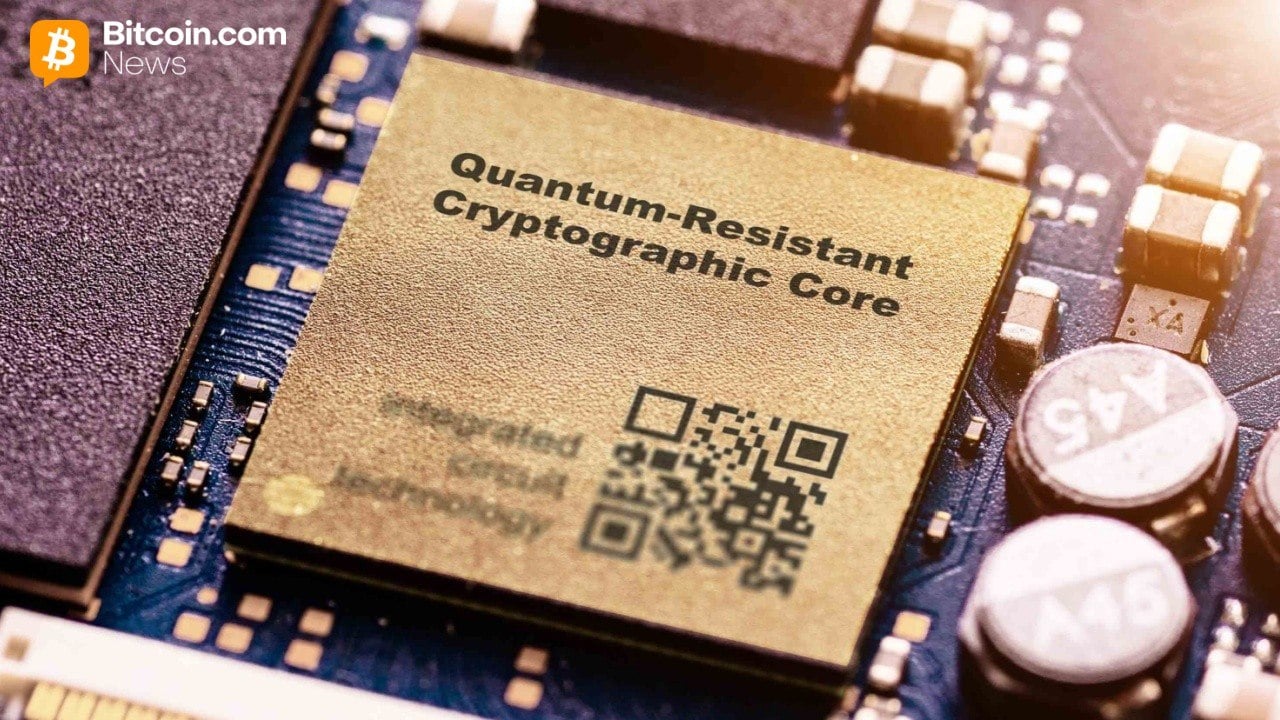
The recently released Google whitepaper on the quantum threat has ignited intense debate over the technical justifications that led authors to aggressively pull forward the migration deadline to 2029. While a few critics have dismissed the findings as alarmist, a broad consensus of industry experts suggests that a warning of this magnitude from a primary driver of quantum research should serve as a definitive wake-up call for developers to begin immediate post-quantum preparations.
Guy Zyskind, computer scientist and founder of Fhenix—a project integrating fully homomorphic encryption (FHE) into the Ethereum ecosystem—noted that the whitepaper effectively reframes the conversation. According to Zyskind, the traditional 10-year migration window, which until recently felt pessimistic, now appears “dangerously optimistic” in light of Google’s findings.
Perhaps the most significant takeaway is the weight of the messenger itself; the fact that a tech titan of Google’s stature has attached its name to such a specific timeline should prod the blockchain community toward a fundamental architectural shift. Regarding why the findings in the whitepaper have gained traction, Zyskind said:
“Previous papers in this space tended to be either too theoretical or too optimistic about qubit requirements. This one feels like it’s closing the gap in a way that should make people uncomfortable.”
Meanwhile, the Google whitepaper’s core revelation has sent shockwaves through the blockchain community: Researchers have demonstrated that a “cryptographically relevant quantum computer” (CRQC) could achieve a 41% success rate in hijacking a transaction before it is even confirmed.
Critics warn that this vulnerability could transform the mempool into a “shopping mall” for attackers, who could derive private keys in real time and replace legitimate transfers with fraudulent ones. This level of exposure threatens to dissolve the fundamental trust that underpins the Bitcoin network. To preempt a total collapse of network integrity, some advocates are now calling for an overhaul of blockchain finality architecture, shifting from traditional consensus models to more aggressive, quantum-hardened frameworks.
For his part, Zyskind maintains that moving the entire stack requires post-quantum cryptography (PQC), with lattice-based constructions being the most mature option. While he believes such a move would make mempools safe again, the Fhenix founder still advocates for their encryption.
“While we do that, we might as well start encrypting mempools with PQC encryption and, ideally, with fully homomorphic encryption,” Zyskind explained. “Encrypted mempools solve a bunch of other problems—front-running, MEV extraction, and transaction privacy.”
Structural Vulnerabilities: Bitcoin vs. Ethereum
The Google whitepaper has also forced a re-examination of the structural differences between Bitcoin and the Ethereum ecosystem. While Bitcoin’s primary concern remains the “stealing of coins” via signature exploits, Ethereum’s reliance on complex protocols—including Layer 2 scaling solutions and ZK-rollups that often utilize trusted setups—introduces a more intricate threat profile.
When questioned on whether these dependencies make Ethereum fundamentally more “brittle” than Bitcoin, Zyskind clarified that the distinction lies less in the architecture and more in the permanence of the data being protected.
Zyskind warns that the arrival of a sufficiently powerful quantum computer would not merely “weaken” current zero-knowledge (ZK) systems built on elliptic curve cryptography; it would render them completely obsolete.
“Given a sufficiently powerful quantum computer, any ZK-based system built on elliptic curve cryptography should be considered completely broken,” Zyskind noted. “An attacker can prove false claims, which means they can lie about on-chain state and steal funds. That’s catastrophic.”
However, he pointed out that for standard state transitions and asset transfers, the fix is definitive. Once the Ethereum network and its various layers upgrade to post-quantum secure (PQ-secure) cryptography, the immediate threat of theft is neutralized.
The outlook is significantly grimmer for privacy-centric protocols. While upgrading to PQC can stop future asset theft or stealth inflation, it cannot shield the past. Zyskind highlighted a “deeper problem” inherent to privacy that cannot be solved with a simple software patch: retroactive decryption.
Unlike a hijacked transaction, which is a one-time event, encrypted data stored on a public ledger is permanent. A quantum adversary can wait years to gain the necessary computing power to decrypt historical transactions that were intended to remain private forever.
“All the encrypted data that’s already on-chain, all the transactions that were supposed to be private—a quantum adversary might be able to decrypt those,” Zyskind explained. “So even after you upgrade, users may have their privacy permanently compromised.”
This permanence creates a ticking clock for any protocol handling sensitive data today. For Zyskind and the Fhenix team, this justifies the immediate push for PQ-secure encryption standards before the 2029 deadline arrives.
He concludes with a stark warning for the industry: Users of privacy protocols should operate under the assumption that unless those systems are built from the ground up on PQ-secure encryption, their historical data will eventually be exposed. In the quantum era, privacy isn’t just about protecting the next transaction—it’s about ensuring the past remains buried.
FAQ ❓
- Why did Google set 2029 as the migration deadline? Because its whitepaper shows quantum attacks may arrive sooner than expected, making the traditional 10‑year window “dangerously optimistic.”
- What’s the immediate risk for Bitcoin and Ethereum? A cryptographically relevant quantum computer could hijack transactions in real time, threatening both coin security and complex protocol integrity.
- How should blockchain developers respond now? Experts urge urgent adoption of post‑quantum cryptography, with lattice‑based schemes and encrypted mempools as leading defenses.
- Can PQC upgrades protect past data? No—privacy protocols face retroactive decryption risks, meaning historical on‑chain data may be exposed once quantum power matures.