



• About
  • FAQ
  • Earn Bitcoin while Surfing the net
  • Buy & Sell Crypto on Paxful
Newsletter
Approx Foundation
  • Home
    • Home – Layout 1
  • Bitcoin
  • Ethereum
  • Regulation
  • Market
  • Blockchain
  • Business
  • Guide
  • Contact Us
No Result
View All Result
  • Home
    • Home – Layout 1
  • Bitcoin
  • Ethereum
  • Regulation
  • Market
  • Blockchain
  • Business
  • Guide
  • Contact Us
No Result
View All Result
Approx Foundation
No Result
View All Result
Home Bitcoin

Physicists Recreated the Way a Spinning Black Hole Leaks Energy, on a Tabletop

Moussa by Moussa
July 26, 2026
in Bitcoin
0
Physicists Recreated the Way a Spinning Black Hole Leaks Energy, on a Tabletop
190
SHARES
1.5k
VIEWS
Share on FacebookShare on Twitter

Related articles

MEXC and Payward Signal Intent to Explore Broader Collaboration Ahead of TOKEN2049

MEXC and Payward Signal Intent to Explore Broader Collaboration Ahead of TOKEN2049

October 5, 2026
French Executives Propose Taxing Crypto-to-Stablecoin Conversions

French Executives Propose Taxing Crypto-to-Stablecoin Conversions

October 5, 2026


Key Takeaways

  • CUNY ASRC achieved 7.8 dB wave gain in a stationary circuit, validating 1969 superradiance theory.
  • Nature’s July 8, 2026, study could expand broadband amplification for quantum and wave technologies.
  • Andrea Alù said DoD and NSF-backed research opens new paths for synthetic wave systems beyond 2026.

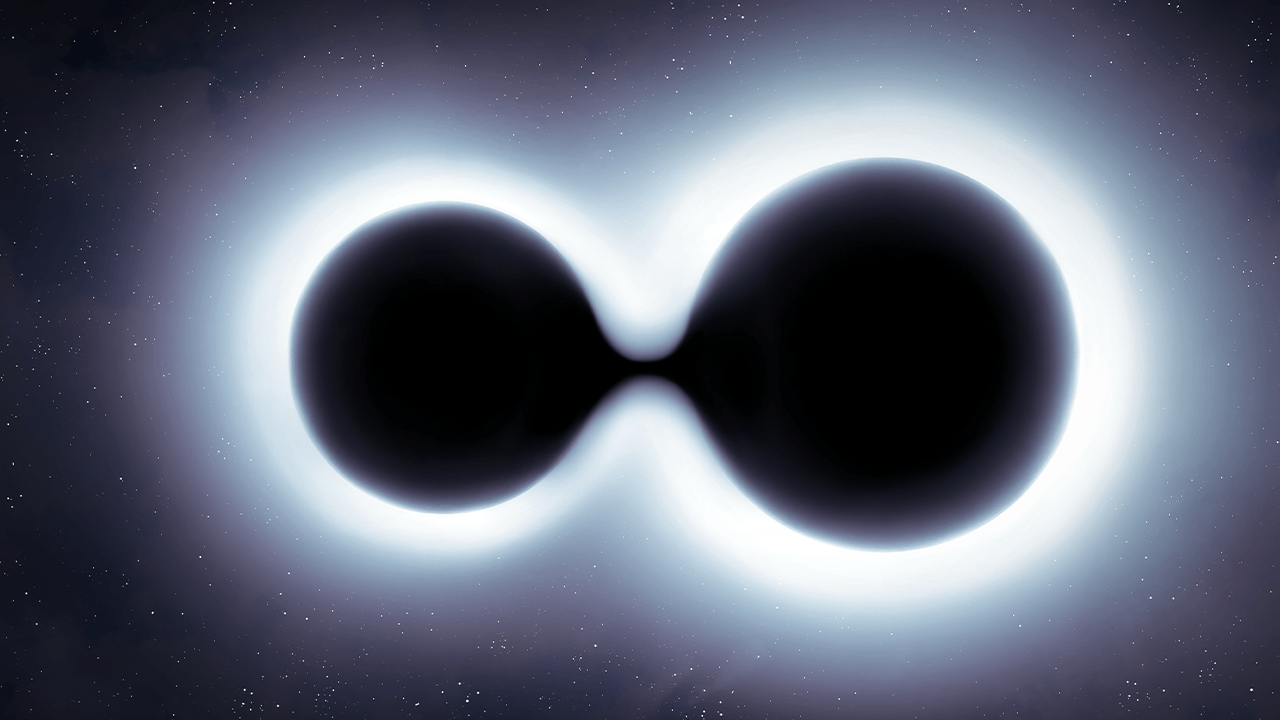
At the CUNY Graduate Center’s Advanced Science Research Center, physicists built a ring-shaped network of electronic resonators that never physically spins, yet still coaxes electromagnetic waves into stealing energy from it. By rapidly modulating the circuit in a carefully timed sequence, the team created a traveling pattern that makes the system look like ultrafast rotation to the waves, reproducing the decades-old Penrose Zel’dovich superradiance idea in a working lab setup. The result was measurable amplification, 7.8 dB of gain, without any moving parts. The work, published in Nature on July 8, 2026, reframes what used to require literal spinning cylinders, disks, or vortices into something that fits on a tabletop.

If you spend your days tracking chips, AI models, and Big Tech’s next move, it is easy to forget that some of the most consequential “tech” is still happening at a lab bench. This month, a team in New York City turned a half-century-old black hole idea into a working device, the kind of result that quietly reshapes what engineers think is possible.

A black hole theory brought to the lab

Researchers at the CUNY Advanced Science Research Center (ASRC) at the CUNY Graduate Center showed that a stationary tabletop circuit can mimic the energy-extraction physics long associated with rotating black holes. ScienceDaily’s July 2026 release framed it plainly: a lab setup recreated the mechanics of pulling energy from rotation, without needing anything to physically spin.

The work was published in Nature on July 8, 2026, under the title “Observation of Floquet rotational super-radiance,” by Hadiseh Nasari, Hady Moussa, Yoshiaki Kasahara, Arno Thielens and Andrea Alù. For anyone who files “astrophysics” in a different mental drawer than “electronics,” that publication venue is a signal: this is fundamental physics with real hardware implications.

Synthetic ultrafast rotation, no moving parts

The core trick is a ring-shaped network of electronic resonators. By rapidly modulating resonator properties in a carefully timed sequence, the team created a traveling pattern around the ring so electromagnetic waves interacted as if the system were rotating at ultrafast speed, per synthetic rotation descriptions of the experiment.

That “as if” turned into a measurable win: the circuit delivered 7.8 dB of gain, meaning the waves came out amplified, even though the device never moved. TechTimes highlighted the 7.8 dB result, a concrete number that makes the concept feel less like a thought experiment and more like an engineering knob.

Decades of theory, now validated

The lineage runs back to Roger Penrose’s 1969 proposal: inside a rotating black hole’s ergosphere, a particle could split so that one piece falls in while the other escapes with more energy than the original. Physicist Yakov Zel’dovich later extended the idea to waves, predicting that a wave interacting with a sufficiently fast rotating object could extract energy and become amplified, an effect often called rotational superradiance.

Co-lead author Hady Moussa put the lab version in one clean sentence: “Waves with the appropriate rotational characteristics extracted energy from the system and became amplified, reproducing the essential physics of the Penrose-Zel’dovich process.” And unlike earlier demonstrations using rotating water vortices (2017), rotating acoustic disks (2020), or rotating metallic cylinders (2024), this one avoided spinning matter entirely.

Why tech people should care

Principal investigator Andrea Alù, Distinguished Professor and Einstein Professor of Physics at the CUNY Graduate Center, described the approach as “a new method of wave-matter interaction” that yields “broadband selective amplification.” Lead author Hadiseh Nasari said it “moves ideas about extreme rotational dynamics from theory to practice,” positioning the setup as a flexible platform for work across astrophysics, wave physics, and quantum science.

The funding also hints at downstream interest: the research was supported by the U.S. Department of Defense, the U.S. National Science Foundation, and the Simons Foundation. If a stationary circuit can convincingly impersonate an extreme rotating environment, what other “impossible” dynamics might engineers start synthesizing next?




Source link

Share76Tweet48

Related Posts

MEXC and Payward Signal Intent to Explore Broader Collaboration Ahead of TOKEN2049

MEXC and Payward Signal Intent to Explore Broader Collaboration Ahead of TOKEN2049

by Moussa
October 5, 2026
0

Reason to trust Strict editorial policy that focuses on accuracy, relevance, and impartiality Created by industry experts and meticulously reviewed...

French Executives Propose Taxing Crypto-to-Stablecoin Conversions

French Executives Propose Taxing Crypto-to-Stablecoin Conversions

by Moussa
October 5, 2026
0

French Crypto Executive Trio Proposes Crypto-to-Stablecoin Exchange Tax A proposal to develop a new crypto taxation regime has surged in...

Oak Trees Have a Sneaky Trick to Starve the Caterpillars Eating Them

Oak Trees Have a Sneaky Trick to Starve the Caterpillars Eating Them

by Moussa
October 5, 2026
0

Key TakeawaysUniversity of Würzburg found a 3-day oak budburst delay sharply cuts caterpillar survival.Nature Ecology & Evolution found oak leaf...

Webull Becomes X Cashtag Partner for Crypto and Stock Trading

Webull Becomes X Cashtag Partner for Crypto and Stock Trading

by Moussa
October 5, 2026
0

Key TakeawaysThe connection offers real-time quotes, charts, and access to order entry.Potential data uses extend to investor sentiment and emerging...

Ethereum’s zkAPI Gives AI Payments a Privacy Cloak With a Catch – Bitcoin News

Ethereum’s zkAPI Gives AI Payments a Privacy Cloak With a Catch – Bitcoin News

by Moussa
October 5, 2026
0

Key TakeawaysEthereum Foundation’s (EF) zkAPI went live Oct. 1, separating API payments from identity.Open Anonymity uses zero-knowledge proofs so funded...

Load More

youssufi.com

sephina.com

[vc_row full_width="stretch_row" parallax="content-moving" vc_row_background="" background_repeat="no-repeat" background_position="center center" footer_scheme="dark" css=".vc_custom_1517813231908{padding-top: 60px !important;padding-bottom: 30px !important;background-color: #191818 !important;background-position: center;background-repeat: no-repeat !important;background-size: cover !important;}" footer_widget_title_color="#fcbf46" footer_button_bg="#fcb11e"][vc_column width="1/4"]

We bring you the latest in Crypto News

[/vc_column][vc_column width="1/4"][vc_wp_categories]
[/vc_column][vc_column width="1/4"][vc_wp_tagcloud taxonomy="post_tag"][/vc_column][vc_column width="1/4"]

Newsletter

[vc_raw_html]JTNDcCUzRSUzQ2RpdiUyMGNsYXNzJTNEJTIydG5wJTIwdG5wLXN1YnNjcmlwdGlvbiUyMiUzRSUwQSUzQ2Zvcm0lMjBtZXRob2QlM0QlMjJwb3N0JTIyJTIwYWN0aW9uJTNEJTIyaHR0cHMlM0ElMkYlMkZhcHByb3gub3JnJTJGJTNGbmElM0RzJTIyJTNFJTBBJTBBJTNDaW5wdXQlMjB0eXBlJTNEJTIyaGlkZGVuJTIyJTIwbmFtZSUzRCUyMm5sYW5nJTIyJTIwdmFsdWUlM0QlMjIlMjIlM0UlM0NkaXYlMjBjbGFzcyUzRCUyMnRucC1maWVsZCUyMHRucC1maWVsZC1maXJzdG5hbWUlMjIlM0UlM0NsYWJlbCUyMGZvciUzRCUyMnRucC0xJTIyJTNFRmlyc3QlMjBuYW1lJTIwb3IlMjBmdWxsJTIwbmFtZSUzQyUyRmxhYmVsJTNFJTBBJTNDaW5wdXQlMjBjbGFzcyUzRCUyMnRucC1uYW1lJTIyJTIwdHlwZSUzRCUyMnRleHQlMjIlMjBuYW1lJTNEJTIybm4lMjIlMjBpZCUzRCUyMnRucC0xJTIyJTIwdmFsdWUlM0QlMjIlMjIlM0UlM0MlMkZkaXYlM0UlMEElM0NkaXYlMjBjbGFzcyUzRCUyMnRucC1maWVsZCUyMHRucC1maWVsZC1lbWFpbCUyMiUzRSUzQ2xhYmVsJTIwZm9yJTNEJTIydG5wLTIlMjIlM0VFbWFpbCUzQyUyRmxhYmVsJTNFJTBBJTNDaW5wdXQlMjBjbGFzcyUzRCUyMnRucC1lbWFpbCUyMiUyMHR5cGUlM0QlMjJlbWFpbCUyMiUyMG5hbWUlM0QlMjJuZSUyMiUyMGlkJTNEJTIydG5wLTIlMjIlMjB2YWx1ZSUzRCUyMiUyMiUyMHJlcXVpcmVkJTNFJTNDJTJGZGl2JTNFJTBBJTNDZGl2JTIwY2xhc3MlM0QlMjJ0bnAtZmllbGQlMjB0bnAtcHJpdmFjeS1maWVsZCUyMiUzRSUzQ2xhYmVsJTNFJTNDaW5wdXQlMjB0eXBlJTNEJTIyY2hlY2tib3glMjIlMjBuYW1lJTNEJTIybnklMjIlMjByZXF1aXJlZCUyMGNsYXNzJTNEJTIydG5wLXByaXZhY3klMjIlM0UlQzIlQTBCeSUyMGNvbnRpbnVpbmclMkMlMjB5b3UlMjBhY2NlcHQlMjB0aGUlMjBwcml2YWN5JTIwcG9saWN5JTNDJTJGbGFiZWwlM0UlM0MlMkZkaXYlM0UlM0NkaXYlMjBjbGFzcyUzRCUyMnRucC1maWVsZCUyMHRucC1maWVsZC1idXR0b24lMjIlM0UlM0NpbnB1dCUyMGNsYXNzJTNEJTIydG5wLXN1Ym1pdCUyMiUyMHR5cGUlM0QlMjJzdWJtaXQlMjIlMjB2YWx1ZSUzRCUyMlN1YnNjcmliZSUyMiUyMCUzRSUwQSUzQyUyRmRpdiUzRSUwQSUzQyUyRmZvcm0lM0UlMEElM0MlMkZkaXYlM0UlM0NiciUyRiUzRSUzQyUyRnAlM0U=[/vc_raw_html][/vc_column][/vc_row]
No Result
View All Result
  • Contact Us
  • Homepages
  • Business
  • Guide

© 2024 APPROX FOUNDATION - The Crypto Currency News