



• About
  • FAQ
  • Earn Bitcoin while Surfing the net
  • Buy & Sell Crypto on Paxful
Newsletter
Approx Foundation
  • Home
    • Home – Layout 1
  • Bitcoin
  • Ethereum
  • Regulation
  • Market
  • Blockchain
  • Business
  • Guide
  • Contact Us
No Result
View All Result
  • Home
    • Home – Layout 1
  • Bitcoin
  • Ethereum
  • Regulation
  • Market
  • Blockchain
  • Business
  • Guide
  • Contact Us
No Result
View All Result
Approx Foundation
No Result
View All Result
Home Bitcoin

Elon Musk Says ‘Money Won’t Matter by 2036’ as Robotics and AI Flood Global Markets

Moussa by Moussa
July 26, 2026
in Bitcoin
0
Elon Musk Says ‘Money Won’t Matter by 2036’ as Robotics and AI Flood Global Markets
189
SHARES
1.5k
VIEWS
Share on FacebookShare on Twitter

Related articles

How do Bitcoin mining pools typically handle payout frequency versus thresholds?

How do I optimize my usage of oclvanitygen?

July 26, 2026
How do Bitcoin mining pools typically handle payout frequency versus thresholds?

api – Get transaction that spent a transaction id

July 26, 2026


Key Takeaways

  • Elon Musk told The Economist money will not matter by 2036 as artificial intelligence (AI) and robots outproduce demand.
  • Critics including Tyler Cowen argue energy, land, and attention will stay scarce even by 2036.
  • Musk called the shift bumpy, pointing to income transfers as the likely next policy fight.

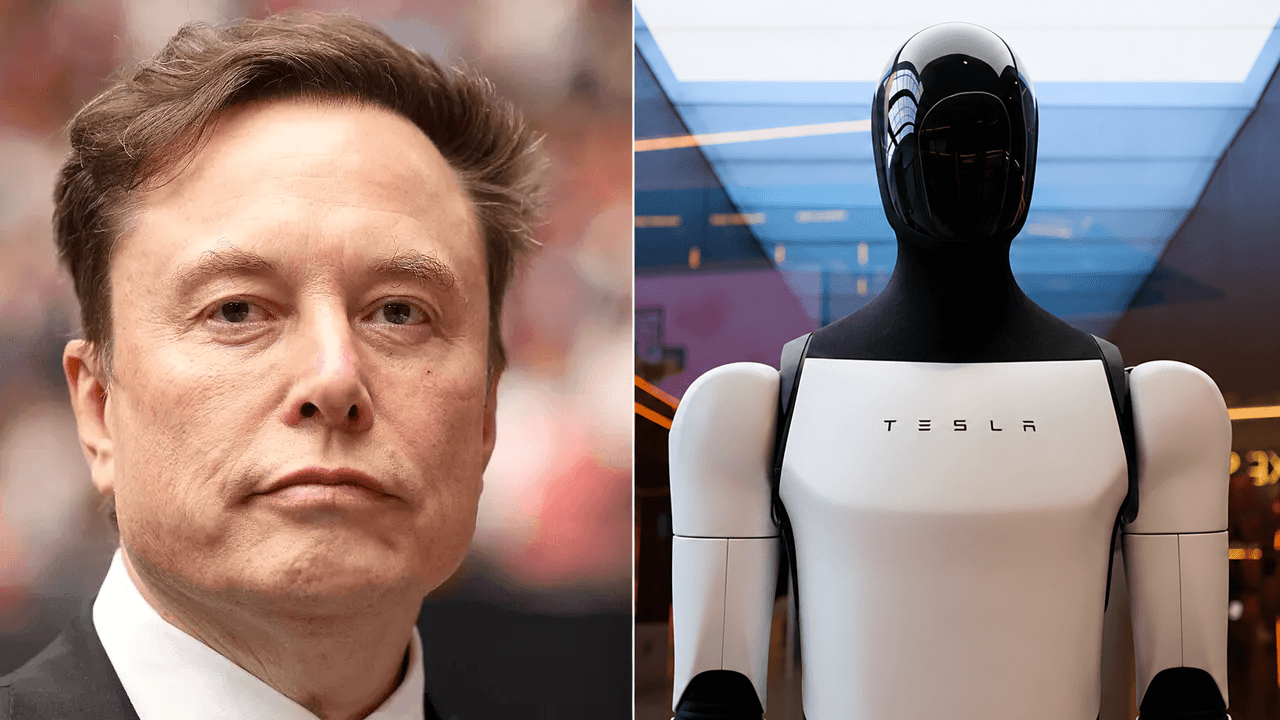
Musk made the prediction during an extended interview with Economist editor-in-chief Zanny Minton Beddoes, recorded at the Texas Gigafactory and published in late July 2026 as part of the outlet’s Insider series.

“You want money for food, housing, transport, entertainment,” Musk said. “If that is so abundant, what do you need money for in that case?”

He predicted deflation rather than inflation, arguing output would outrun the money supply as robots and AI take over production. He also suggested governments could simply issue checks to citizens once goods become abundant enough.

A Prediction With a History

Musk has floated versions of this idea before. In past conversations with entrepreneur Peter Diamandis, he has described “universal high income” replacing basic income, work becoming optional, and money losing relevance as AI and humanoid robots outproduce human needs.

Musk has pointed to Iain M. Banks’ Culture novels as a model for what a positive AI future looks like. In those books, advanced machine intelligences called Minds handle production and logistics, citizens face no material want, and money is treated as a marker of poverty rather than a tool. SpaceX names its drone ships after vessels from the series.

Diamandis has pushed a similar abundance argument for years through the XPRIZE Foundation. He argues that exponential gains in energy, computing, robotics, and manufacturing will push the cost of many goods toward the cost of raw materials and electricity.

Other technologists share pieces of the same outlook. Mustafa Suleyman has discussed a universal basic provision built on abundant intelligence. Sam Altman has funded basic income experiments while building AI systems that could make large-scale transfers necessary. Ray Kurzweil’s singularity forecasts have long assumed a similar abundance follows accelerating computation.

Economists Question the Timeline

Not everyone accepts that AI will do such things and the 2036 date. Economists at the American Institute for Economic Research and writers at The Daily Economy argue that scarcity does not disappear when robots make physical goods cheap. It shifts. A house with a specific view, a seat at a top school, or the attention of in-demand people remains scarce, no matter how cheap manufactured goods become. Money, or something like it, still rations access to those things.

Critics have also raised governance questions. If a small number of companies own the robots and the energy infrastructure that powers them, distributing the resulting abundance does not happen automatically. Tesla’s own valuation, built partly on Optimus robot ambitions, still depends on investors who expect returns paid in the currency Musk says will soon matter less.

Economists Tyler Cowen and Noah Smith have pointed to comparative advantage as a limiting factor. Even in a world where AI outperforms humans at most tasks, people may still command wages where the scarce input is human presence, judgment, or accountability. Energy availability, land for data centers and robot factories, and the pace at which institutions can absorb labor displacement may end up as the real constraints, not the intelligence of the machines themselves.

Why It Matters

The prediction lands at a moment when governments, investors, and workers are already grappling with how fast AI and automation are moving through the economy. If Musk is right even partially, it points toward:

  • Falling prices for goods and services tied to automated production
  • Growing pressure on governments to fund large-scale income transfers
  • A shift in where scarcity and value concentrate, toward energy, land, and attention rather than manufactured goods

Musk has acknowledged the transition will be “bumpy” and could bring social strain as jobs disappear faster than new roles replace them. That acknowledgment sits closer to what past waves of automation have actually produced: uneven gains, real disruption, and institutions forced to adapt under pressure rather than a clean shift to abundance for everyone at once.

Money functions as a way to coordinate trade-offs under scarcity. Robots assembling houses or generating entertainment do not remove every scarce resource. Energy, land, political power, and genuine novelty stay limited. Whatever system allocates them will still need a pricing signal, whether or not it goes by the name money.

The next decade will test which constraints actually hold. Musk’s forecast raises real questions about what happens once machines can produce more than people need. Whether the answer arrives by 2036, and whether it removes money’s role rather than changing its form, remains an open bet.




Source link

Share76Tweet47

Related Posts

How do Bitcoin mining pools typically handle payout frequency versus thresholds?

How do I optimize my usage of oclvanitygen?

by Moussa
July 26, 2026
0

I'd like to extract the most performance possible from oclvanitygen. Can anyone tell me what the best practices are with...

How do Bitcoin mining pools typically handle payout frequency versus thresholds?

api – Get transaction that spent a transaction id

by Moussa
July 26, 2026
0

The blockchain.info API allows for querying information about a particular Transaction by its ID. But if you want to follow...

Bitcoin Enters Volatility Trap as Fed Decision, CLARITY Act and Fork Drama Converge

Bitcoin Enters Volatility Trap as Fed Decision, CLARITY Act and Fork Drama Converge

by Moussa
July 26, 2026
0

Key TakeawaysBitcoin traded at $64,466 on July 26 after failing to hold gains above $66,910 set on July 21.Blackrock’s IBIT...

How do Bitcoin mining pools typically handle payout frequency versus thresholds?

cgminer – ubuntu usb drivers to run bfgminer

by Moussa
July 26, 2026
0

Been racking the brain forever, ubuntu noob, but wiped W7 for Ubuntu, updated and upgraded, checked out bfgminer and cgminer,...

Not Every Bitcoin Mine Is Ready for AI

Not Every Bitcoin Mine Is Ready for AI

by Moussa
July 26, 2026
0

This article first appeared in Miner Weekly, a weekly newsletter by Blocksbridge Consulting curating the latest news in energy, compute,...

Load More

youssufi.com

sephina.com

[vc_row full_width="stretch_row" parallax="content-moving" vc_row_background="" background_repeat="no-repeat" background_position="center center" footer_scheme="dark" css=".vc_custom_1517813231908{padding-top: 60px !important;padding-bottom: 30px !important;background-color: #191818 !important;background-position: center;background-repeat: no-repeat !important;background-size: cover !important;}" footer_widget_title_color="#fcbf46" footer_button_bg="#fcb11e"][vc_column width="1/4"]

We bring you the latest in Crypto News

[/vc_column][vc_column width="1/4"][vc_wp_categories]
[/vc_column][vc_column width="1/4"][vc_wp_tagcloud taxonomy="post_tag"][/vc_column][vc_column width="1/4"]

Newsletter

[vc_raw_html]JTNDcCUzRSUzQ2RpdiUyMGNsYXNzJTNEJTIydG5wJTIwdG5wLXN1YnNjcmlwdGlvbiUyMiUzRSUwQSUzQ2Zvcm0lMjBtZXRob2QlM0QlMjJwb3N0JTIyJTIwYWN0aW9uJTNEJTIyaHR0cHMlM0ElMkYlMkZhcHByb3gub3JnJTJGJTNGbmElM0RzJTIyJTNFJTBBJTBBJTNDaW5wdXQlMjB0eXBlJTNEJTIyaGlkZGVuJTIyJTIwbmFtZSUzRCUyMm5sYW5nJTIyJTIwdmFsdWUlM0QlMjIlMjIlM0UlM0NkaXYlMjBjbGFzcyUzRCUyMnRucC1maWVsZCUyMHRucC1maWVsZC1maXJzdG5hbWUlMjIlM0UlM0NsYWJlbCUyMGZvciUzRCUyMnRucC0xJTIyJTNFRmlyc3QlMjBuYW1lJTIwb3IlMjBmdWxsJTIwbmFtZSUzQyUyRmxhYmVsJTNFJTBBJTNDaW5wdXQlMjBjbGFzcyUzRCUyMnRucC1uYW1lJTIyJTIwdHlwZSUzRCUyMnRleHQlMjIlMjBuYW1lJTNEJTIybm4lMjIlMjBpZCUzRCUyMnRucC0xJTIyJTIwdmFsdWUlM0QlMjIlMjIlM0UlM0MlMkZkaXYlM0UlMEElM0NkaXYlMjBjbGFzcyUzRCUyMnRucC1maWVsZCUyMHRucC1maWVsZC1lbWFpbCUyMiUzRSUzQ2xhYmVsJTIwZm9yJTNEJTIydG5wLTIlMjIlM0VFbWFpbCUzQyUyRmxhYmVsJTNFJTBBJTNDaW5wdXQlMjBjbGFzcyUzRCUyMnRucC1lbWFpbCUyMiUyMHR5cGUlM0QlMjJlbWFpbCUyMiUyMG5hbWUlM0QlMjJuZSUyMiUyMGlkJTNEJTIydG5wLTIlMjIlMjB2YWx1ZSUzRCUyMiUyMiUyMHJlcXVpcmVkJTNFJTNDJTJGZGl2JTNFJTBBJTNDZGl2JTIwY2xhc3MlM0QlMjJ0bnAtZmllbGQlMjB0bnAtcHJpdmFjeS1maWVsZCUyMiUzRSUzQ2xhYmVsJTNFJTNDaW5wdXQlMjB0eXBlJTNEJTIyY2hlY2tib3glMjIlMjBuYW1lJTNEJTIybnklMjIlMjByZXF1aXJlZCUyMGNsYXNzJTNEJTIydG5wLXByaXZhY3klMjIlM0UlQzIlQTBCeSUyMGNvbnRpbnVpbmclMkMlMjB5b3UlMjBhY2NlcHQlMjB0aGUlMjBwcml2YWN5JTIwcG9saWN5JTNDJTJGbGFiZWwlM0UlM0MlMkZkaXYlM0UlM0NkaXYlMjBjbGFzcyUzRCUyMnRucC1maWVsZCUyMHRucC1maWVsZC1idXR0b24lMjIlM0UlM0NpbnB1dCUyMGNsYXNzJTNEJTIydG5wLXN1Ym1pdCUyMiUyMHR5cGUlM0QlMjJzdWJtaXQlMjIlMjB2YWx1ZSUzRCUyMlN1YnNjcmliZSUyMiUyMCUzRSUwQSUzQyUyRmRpdiUzRSUwQSUzQyUyRmZvcm0lM0UlMEElM0MlMkZkaXYlM0UlM0NiciUyRiUzRSUzQyUyRnAlM0U=[/vc_raw_html][/vc_column][/vc_row]
No Result
View All Result
  • Contact Us
  • Homepages
  • Business
  • Guide

© 2024 APPROX FOUNDATION - The Crypto Currency News