



Key Takeaways
- BIP-110 nears block 961,632 with only 2.45% miner support.
- Bitcoin’s 2017 fork boom produced more than 50 proposed coins.
- Strategy’s Michael Saylor told BIP-110 supporters to “stand down.”
BIP-110 Faces Its Moment of Truth
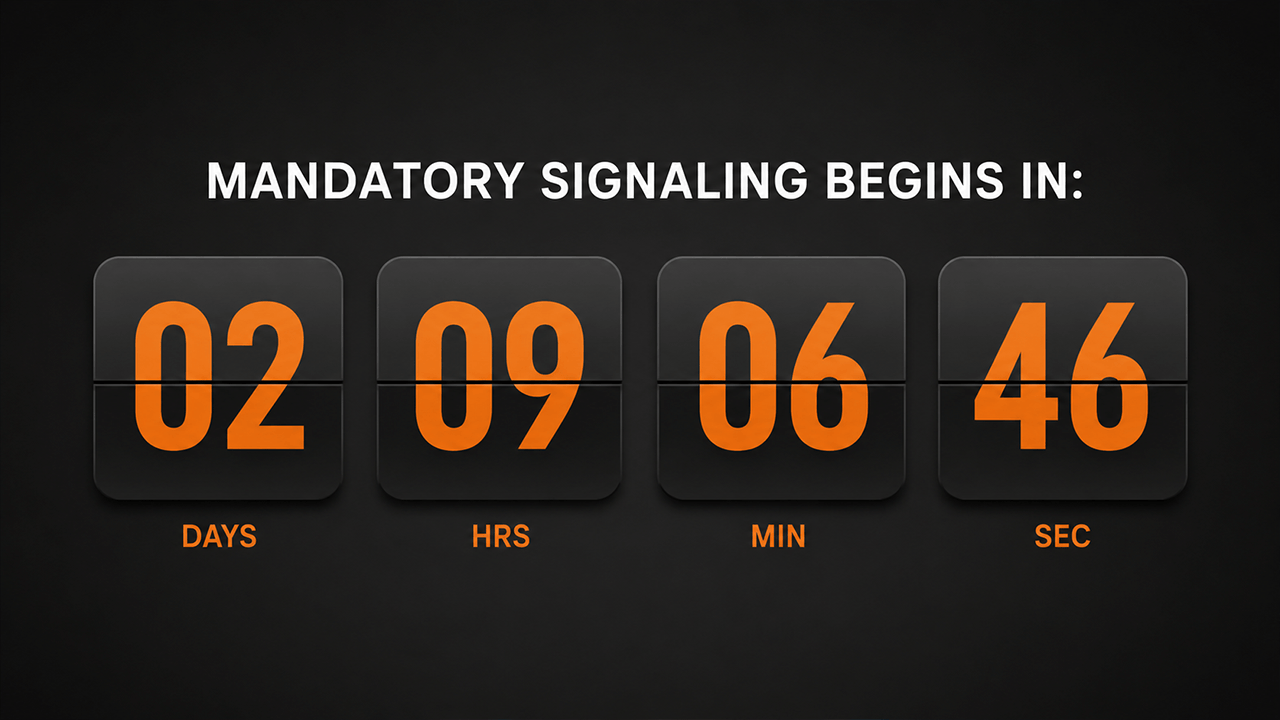
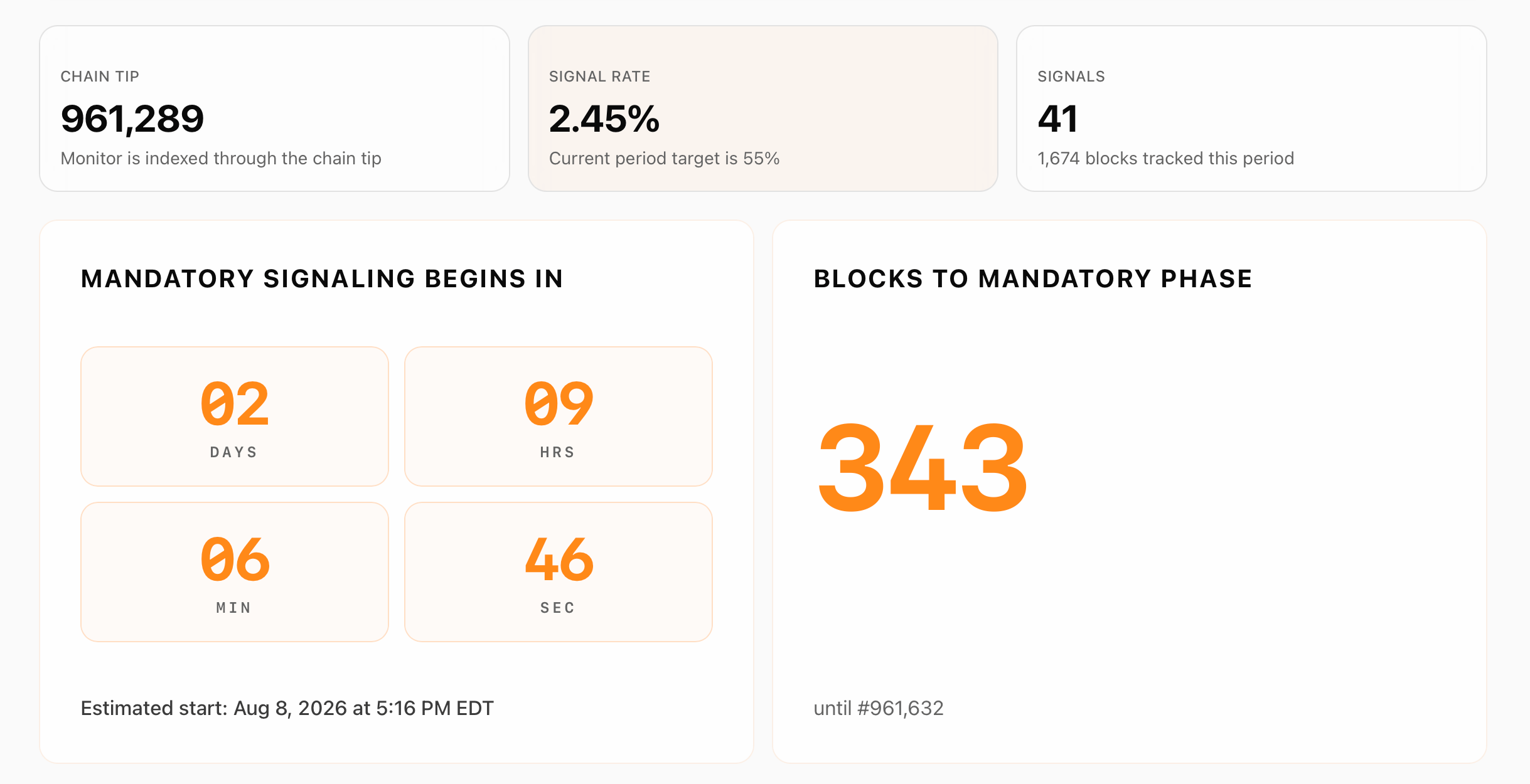
At block 961,289 on Thursday morning, Bitcoin sat roughly 343 blocks from BIP-110’s mandatory signaling phase. The bip110.org/monitor dashboard showed just 41 supporting blocks among 1,674 counted in the current period, leaving signaling at 2.45%. The mandatory window was projected to begin Aug. 8 at approximately 5:16 p.m. EDT.
The proposal called BIP-110, formally named the Reduced Data Temporary Softfork, would clamp down on Bitcoin’s data rules for about one year. It limits the size of certain data elements inserted into transactions, including tools used by Ordinals inscriptions and several token protocols. Backers argue the restrictions would slow blockchain growth, cut node operating costs and push Bitcoin back toward straightforward financial transfers.
The proposal is distributed mainly through Bitcoin Knots, an alternative implementation of Bitcoin’s node software. Bitcoin Core, which runs across much of the network, has not adopted BIP-110. Ordinary bitcoin payments and Lightning Network transfers are designed to keep working under the proposal, while existing coins would require no migration, conversion or special handling.
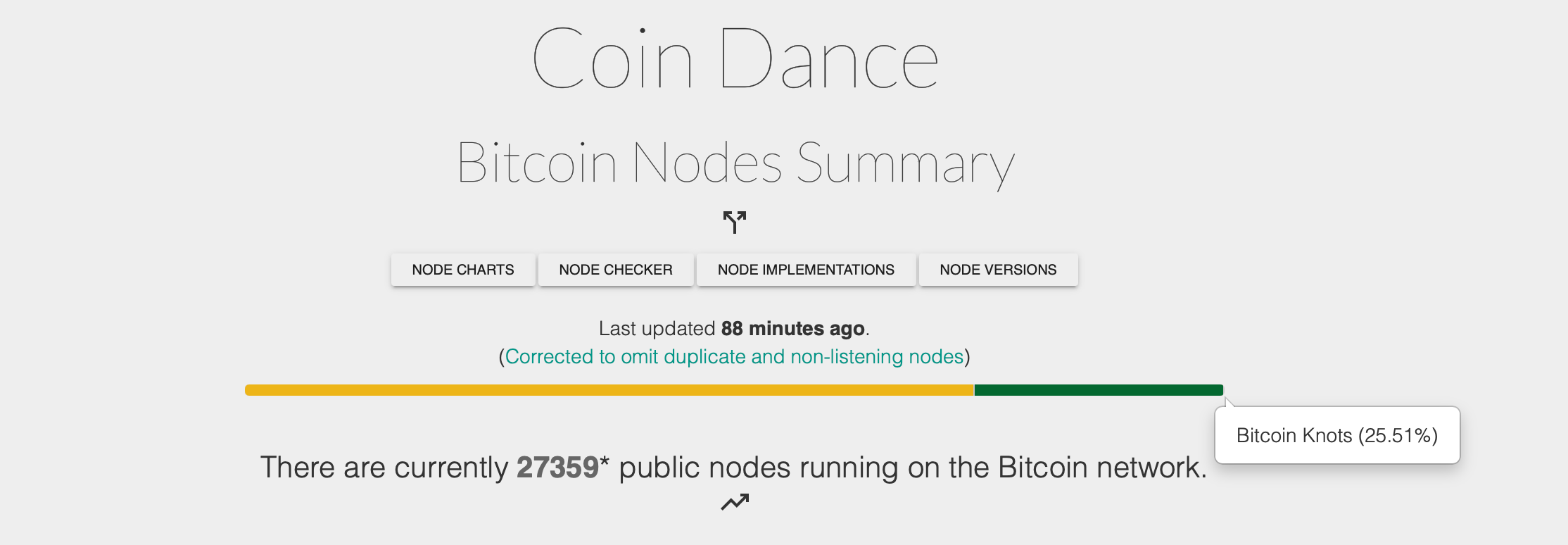
The real fight is not simply over the restrictions, but over the activation method chosen by supporters. BIP-110 sets a 55% miner signaling threshold, far below the roughly 95% level associated with several earlier Bitcoin upgrades. It also tells enforcing nodes to reject nonsignaling blocks after block 961,632, even if those blocks carry nearly all of the network’s computing power. That distinction matters because code can enforce a rule, but it cannot manufacture hashpower, liquidity or economic legitimacy.
A Minority Chain Could Mint Another Coin
That enforcement setup can produce two competing transaction histories. Most miners and Bitcoin Core users are expected to remain with the existing rules, while BIP-110 nodes could peel away onto a smaller chain built exclusively from signaling blocks. Operators who have watched earlier forks know the first blocks are the easy part; keeping infrastructure alive is where weak chains usually break quickly.
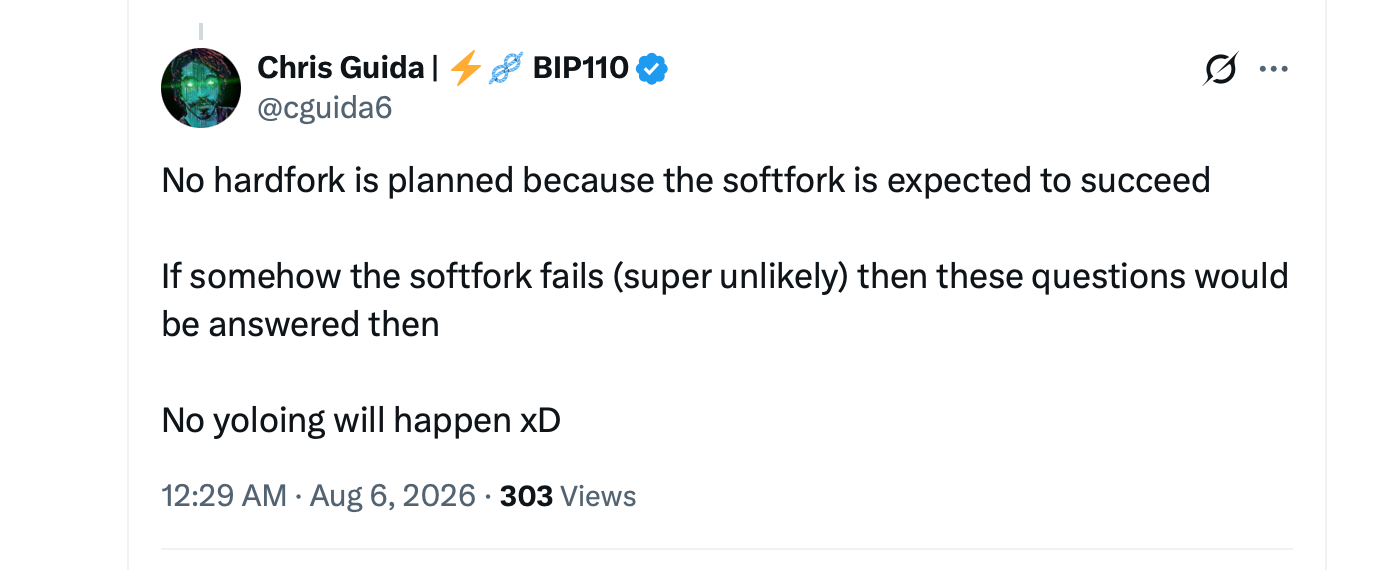
With support hovering near 2.5%, that minority chain could crawl at first, producing blocks far slower than Bitcoin’s normal rhythm of roughly one every 10 minutes. Mining difficulty would eventually reset, but before that adjustment, confirmations could take hours or even longer. The dominant Bitcoin chain should continue processing blocks without any meaningful interruption.
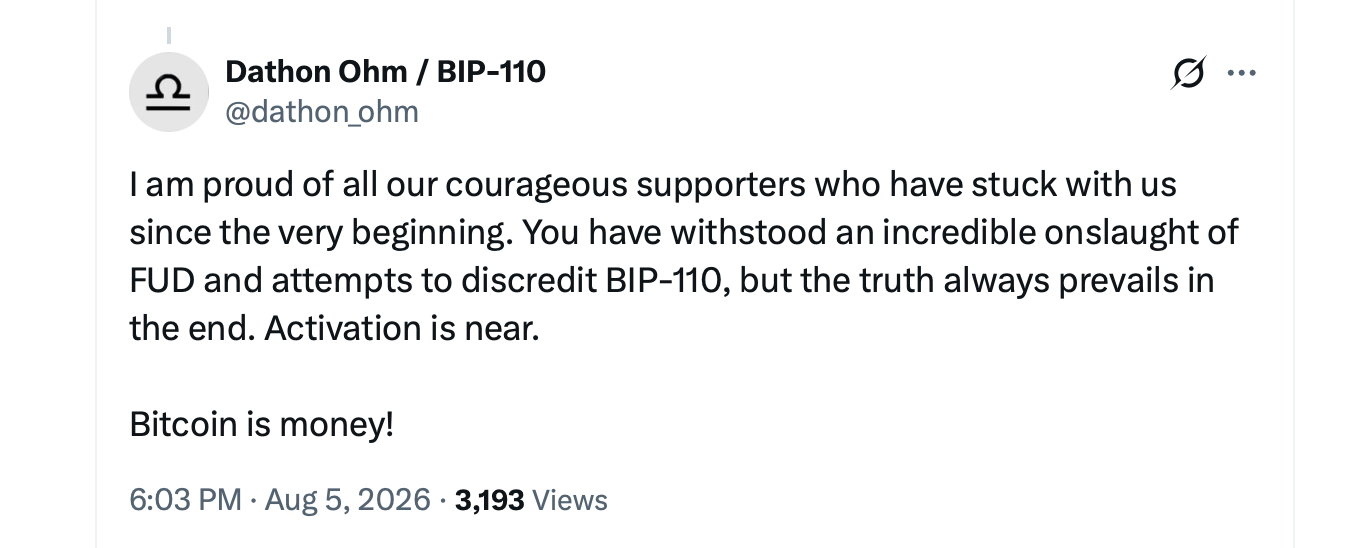
Bitcoin holders could technically own coins on both chains because each side would share the same history before the split. That technical duplication does not create demand. A forked coin still needs functioning wallets, committed miners, exchange listings, custody support, developers, and willing buyers before it becomes anything beyond copied ledger entries.
Large mining pools, including Foundry, Antpool, F2pool and Viabtc, have also refused to signal. F2pool co-founder Chun Wang, who often goes by the handle @satofishi, took to X this week and said:
“Every morning I wake up, open the X app, search for ‘BIP-110,’ and block a few people with the term in their names before breakfast.”
Major centralized exchanges have issued almost no public guidance on BIP-110, and none have committed to listing a separate token. With nearly every dollar of economic activity expected to stay on the main chain, exchanges have little incentive to secure, list, or maintain a fringe asset.
Bitcoin.com News has discovered a small handful of crypto infrastructure providers that have so far announced contingency plans for BIP-110. The Australian bitcoin-only exchange known as Hardblock stated on X:
“ATTN: Hardblock stackers BIP-110 activation is expected around 7–8 August. We may temporarily pause buying, selling, deposits and withdrawals while monitoring the network. If you plan to move to self-custody, consider doing so – with care – sooner than later. Please RT or send to a friend – especially if they’re a Hardblock customer.”
Amboss, the Lightning Network tooling and analytics provider, flagged early August as a live fork danger zone, while Australian bitcoin exchange Bitaroo moved fast on contingency plans, with plans to freeze deposits and withdrawals until the dust settles as mandatory signaling approaches and operational uncertainty starts turning into real counterparty risk exposure.
Public announcements from large international exchanges (Coinbase, Binance, Kraken, etc.), major custodians (Bitgo, Fireblocks, Anchorage, etc.), or other large infrastructure players have stayed very quiet.
That silence looks nothing like 2017, when exchanges regularly published detailed instructions before Bitcoin forks. Platforms halted deposits and withdrawals, prepared fresh trading pairs, and walked customers through claiming duplicated coins. Those operational headaches were justified when rival chains arrived with credible miners, active communities, and obvious speculative demand.
Bitcoin’s 2017 Fork Factory Returns to Focus
The Bitcoin Cash (BCH) network remains the defining example after separating from Bitcoin on Aug. 1, 2017, at block 478,558. The project expanded transaction capacity through larger blocks and quickly secured miners, exchange listings, and liquid trading. Other forked network versions like Bitcoin Gold followed in October, while Bitcoin Diamond, Super Bitcoin, United Bitcoin, and dozens of thinner copycats appeared during the following months.
More than four dozen projects claimed links to Bitcoin’s transaction history during the 2017 and early 2018 fork frenzy. Broader databases counted more than 100 after including abandoned launches, airdrops, and registration-based schemes. Most vanished when developers left, miners disappeared or trading dried up. Bitcoin Cash, BitcoinSV, and Bitcoin Gold remain among the few with a measurable footprint.
Bitcoin’s ownership structure is now dramatically different. During the 2017 wave, retail traders controlled more available bitcoin, and many were comfortable handling private keys and extracting forked assets. A large quantity of bitcoin now sits inside exchange-traded funds (ETFs), corporate balance sheets, and institutional custody platforms responsible for substantial pools of capital.
Blackrock’s spot bitcoin ETF and Strategy’s corporate treasury embody a holder class that barely existed during the original fork mania. These institutions will not automatically recognize a minority asset. Custody contracts, regulatory requirements, and security controls may block clients or shareholders from receiving forked tokens, even when the underlying private keys technically control matching balances.
Strategy founder Michael Saylor has publicly rejected BIP-110 and recently told supporters to “stand down.” Critics like Saylor say forcing a split without broad miner and economic backing adds risk while delivering no benefit to the network most holders actually use. Supporters argue that limiting nonfinancial data is a moral duty and that voluntary efforts failed to stop what they call spam.
The Market Watches Block 961,632
The first hard checkpoint is block 961,632, when BIP-110 nodes are scheduled to reject nonsignaling blocks. Block 963,648 marks the final possible lock-in point under the proposal’s mandatory route, while the full data limits could activate at block 965,664 on any chain that successfully secures lock-in.
For ordinary holders using BTC or leaving funds with major exchanges, no action is presently required. Anyone chasing coins on a minority chain would face replay hazards, unstable wallets, poor infrastructure, and possible private-key exposure. Similar claims during the 2017 fork cycle often delivered rewards worth far less than the security risk required to collect them.
BIP-110 supporters will likely proceed regardless of the signaling rate, but miners, exchanges and major businesses will decide whether their chain matters. Unless that support changes sharply, block 961,632 is more likely to launch a tiny Bitcoin side experiment than a credible battle for control of the network.