


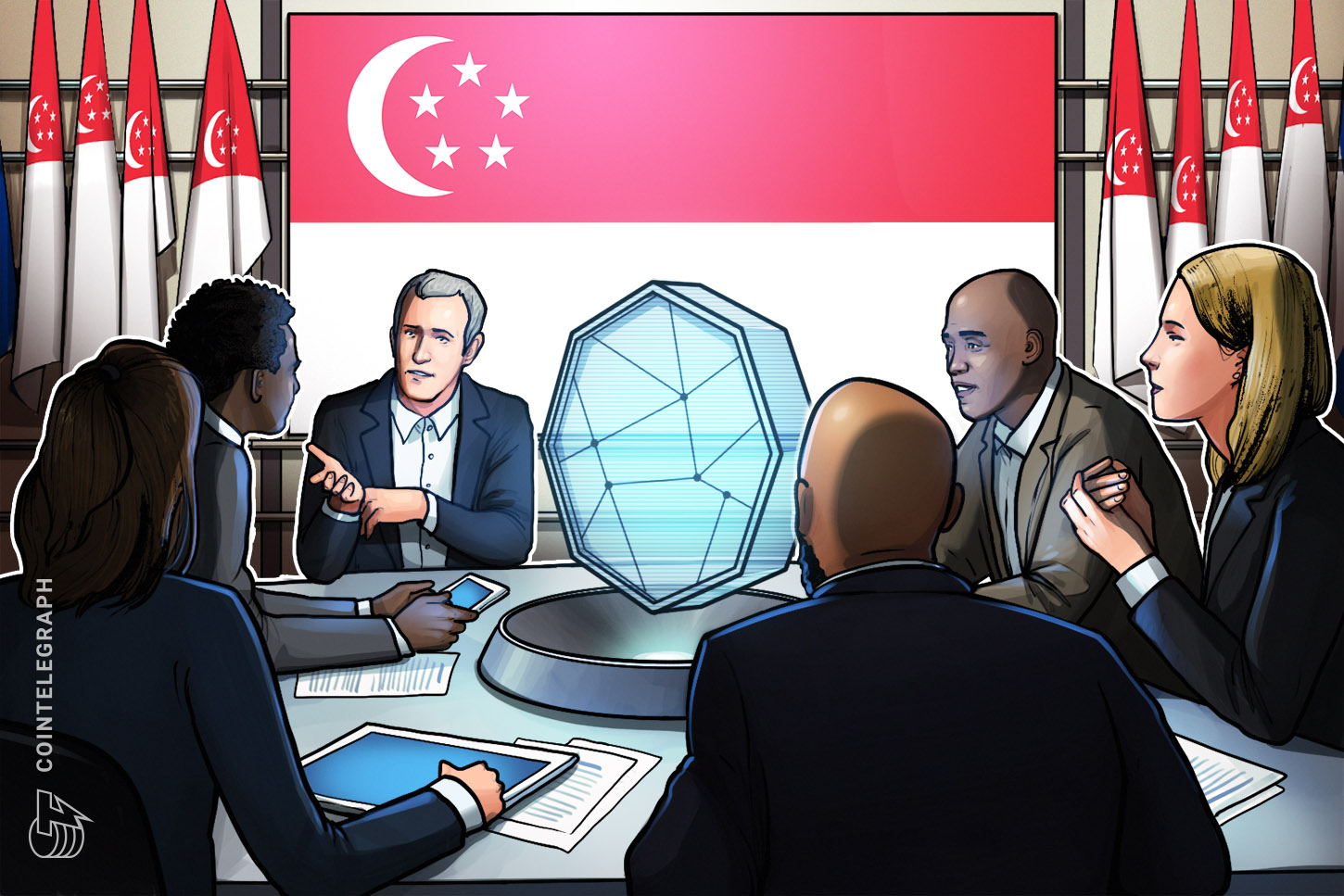

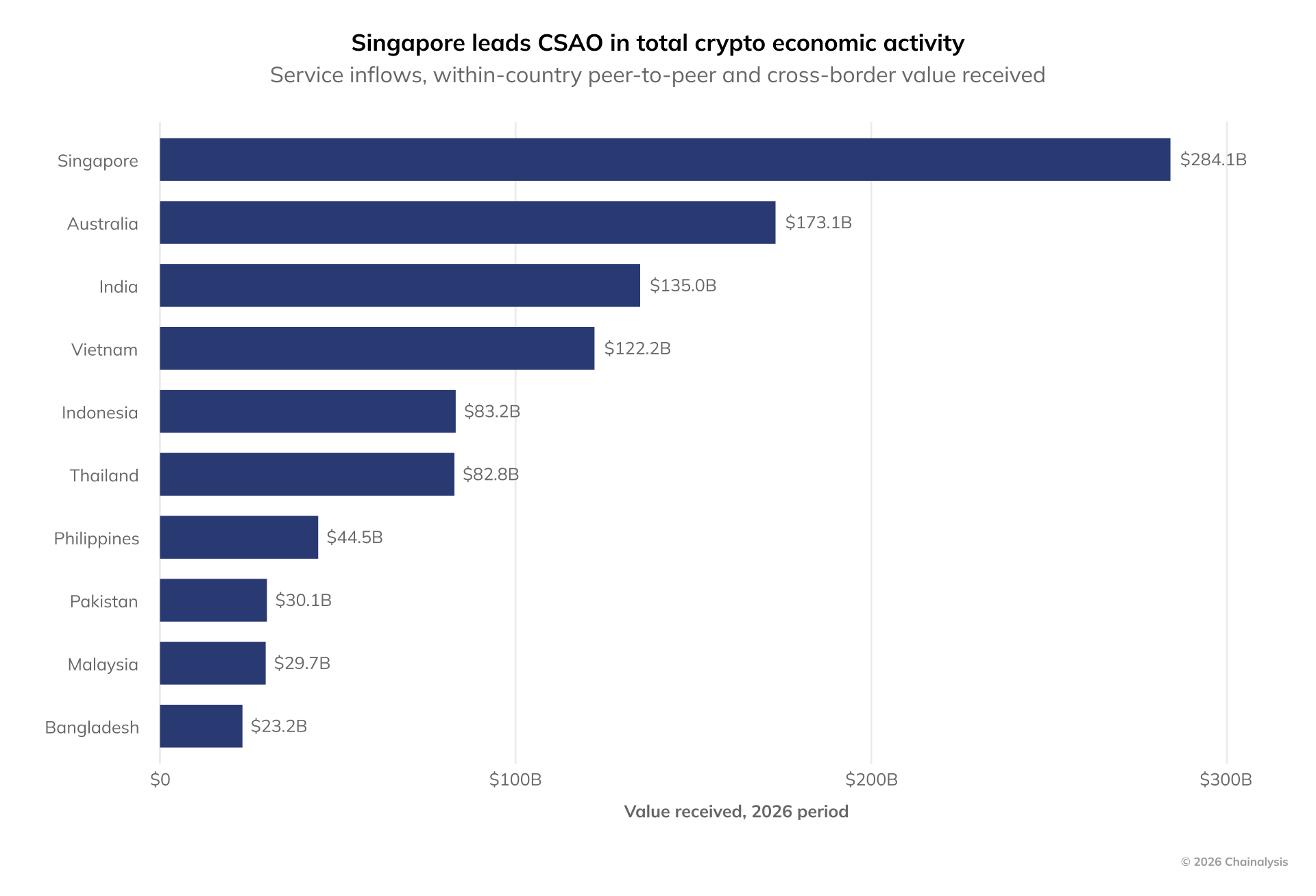
Singapore’s crypto activity rose 55.4% to $284 billion in the year ended June 2026, bucking a regional contraction and regaining its position as the largest crypto economy in Central and Southeast Asia and Oceania (CSAO), according to Chainalysis.
Much of the growth came from institutional platform activity, which increased 94% to $60 billion, concentrated among a small number of market makers, over-the-counter trading firms, and institutional brokerages. Chainalysis said the broader CSAO crypto economy contracted 6.8% over the same period.
“The growth in Singapore’s institutional platform ecosystem was very concentrated and marked by mostly high-volume activity by existing platforms rather than the dynamic entry of new services,” Chainalysis told Cointelegraph.
The findings come as Singapore has been working to tighten crypto regulation while supporting tokenization, stablecoins and digital-asset settlement.
In 2025, MAS required local crypto firms serving overseas clients to obtain a license or exit, a move StraitsX CEO Tianwei Liu said reduced speculative activity while leaving more institutional players, including banks and large companies, using blockchain in production.
At the same time, MAS has expanded tokenization and settlement initiatives. Its BLOOM program supports trials using regulated stablecoins and tokenized bank money. On March 25, Ripple joined the initiative to test cross-border trade settlement using RLUSD.
Philippines, Thailand and Vietnam drive small-value P2P activity
While Singapore stood out for institutional activity, Chainalysis found growing small-value peer-to-peer (P2P) activity in the Philippines, Thailand and Vietnam.
The three countries recorded a combined 5.4 million P2P transfers, both domestic and cross-border, worth less than $10,000 during the reporting period, representing 14.4% of the global total despite accounting for just 2.5% of the global crypto economy.
More than four in five domestic P2P transfers across the three markets were below $1,000, with an average transfer size of $618, compared with $1,210 across the rest of the world.
In the Philippines, the International Monetary Fund previously said authorities view crypto use as primarily driven by remittances and investment, while World Bank data show personal remittances were equivalent to 8.5% of GDP in 2025
In June, Vietnamese outlet Tuoi Tre reported that P2P trading has become an important fiat gateway because the Vietnamese dong is not widely supported in direct crypto trading pairs. In March, Reuters reported that most crypto traders in Vietnam rely on overseas exchanges, making P2P channels an important way for users to move between local bank accounts and crypto traded on those platforms.
In Thailand, the country’s Securities and Exchange Commission said in September it had observed a significant increase in the volume and value of stablecoin transactions, particularly USDT.
Related: Singapore weighs recognizing some foreign-issued stablecoins
Meanwhile, cross-border stablecoin use is on the rise. Chainalysis said cross-border stablecoin activity exceeded domestic activity in every market it analyzed, with cross-border activity across the region 3.2 times larger than domestic activity.
“Stablecoins account for a growing share in all three. Plausibly, the drivers of this adoption link to ease of use, speed and low transfer costs,” Chainalysis told Cointelegraph.
Thailand and Vietnam hosted sizable domestic stablecoin markets, at $10.4 billion and $6.9 billion, respectively, while cross-border stablecoin activity was significantly larger than domestic activity.
In the Philippines, Nichel Gaba, CEO and founder of crypto exchange PDAX, estimated that 5% to 10% of inbound remittances are settled using stablecoins, adding that major remittance companies are pursuing stablecoin settlement initiatives in the country.
In July, the Bank of the Philippine Islands revealed plans for a stablecoin settlement pilot aimed at cutting the cost and processing time of overseas payments to Filipino freelancers and remote workers.
Magazine: Altseason is coming — and traders are more discerning this time