




Anyone who’s ever sent a bank transfer overseas is familiar with the painful process of waiting for things like working hours, correspondent banks and settlement times.
In many cases, it would be faster, cheaper and just more efficient to strap the physical cash to a homing pigeon, or slap it in an envelope and send it via DHL.
Stablecoins can move money across borders around the clock, without waiting for the legacy system to fire up its steam engines.
They can settle transactions 24/7, cut out layers of intermediaries and give people access to digital dollars without even needing a traditional bank account.
So do we even need banks any more? And what are the ramifications of stablecoins offering a faster, cheaper and easier way to move money?
The two clocks
Anthony Vassallo, director of crypto at Silicon Valley Bank, which failed in March 2023 and now operates as a division of First Citizens Bank, tells Magazine competition from stablecoins will show up across two time frames:
“Two clocks matter. One is slow: currency substitution, deposit erosion, and weakening policy transmission building over months or years. One is fast: a depeg, issuer shock, or banking event that can move capital at software speed within hours.”
The European Central Bank raised concerns about the impacts, arguing that large amounts of stablecoin reserves held in bank deposits could trigger cascading withdrawals if there were a surge in redemptions.
The bank points to a “liquidity mismatch” between digital money and the banking system that supports it, with reserve assets subject to traditional settlement timelines, while stablecoins settle around the clock.
Related: MiCA cracks down on USDT in Europe… but no one else cares
We already saw that dynamic in action in March 2023 when USD Coin lost its dollar peg after Circle’s disclosure that $3.3 billion of its reserves were held at the failed Silicon Valley Bank. The incident turned a banking failure into a stablecoin crisis almost overnight, with authorities having to step in to guarantee deposits.
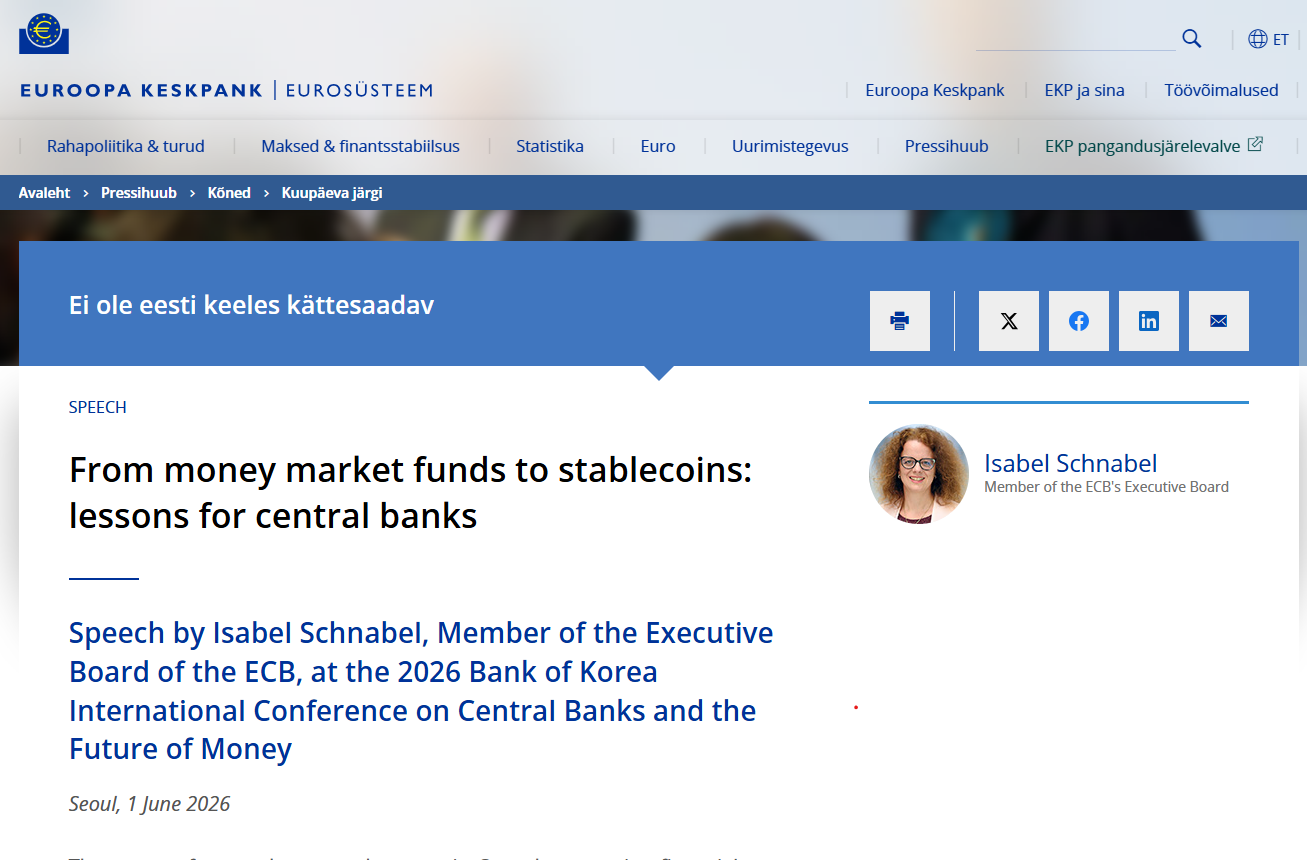
Large stablecoin reserves could trigger a bank run. Source: ECB
Bank runs are pretty extreme cases; the slower clock Vassallo describes has more of a drip-drip effect. It can happen without a crisis, and may be harder to see as it unfolds.
Dollarization at a slower pace
In July 2026, the Bank for International Settlements looked at stablecoin flows and conventional foreign currency deposits across 130 economies.
It found that both tend to grow at times of currency pressure and during banking or sovereign crises, with stablecoin flows appearing less affected by capital controls.
So, when people are trying to move out of a deteriorating local currency, stablecoins can provide a dollar-based alternative that’s harder for local governments to contain.
A September report from Sphere Labs and SVB describes Argentina, Nigeria and Turkey as markets where stablecoin demand has been closely connected to demand for dollar exposure.
In Argentina, for example, it says 94% of crypto bought with pesos was in stablecoins, while in Turkey, around $38 billion worth of lira was swapped for stablecoins over a year.
Arnold Lee, chief executive of Sphere Labs, says stablecoin adoption is fundamentally a dollar story driven by demand for dollars from people who face barriers to accessing the traditional banking system. He tells Magazine:
“Most of these economies are going to keep moving toward dollars […] What I spend my time on is the manner of it, because a country that manages the shift and one that gets overtaken by it end up in very different places.”
When the clock speeds up
A separate BIS study published in March found that a rise in demand for dollar stablecoins can spill into traditional currency markets.
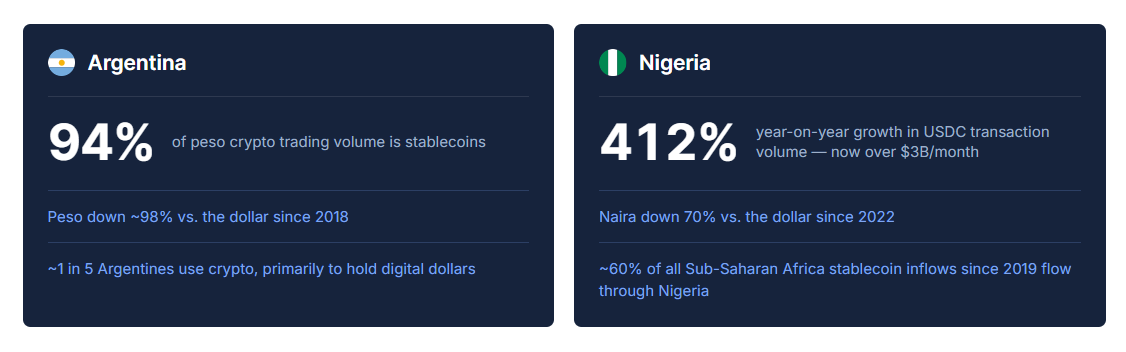
Markets where stablecoin demand is connected to demand for dollar exposure. Source: Sphere/SVB
The study looked at four major USD-pegged stablecoins across 27 fiat currencies between 2021 and 2025, and found that increased stablecoin demand could put downward pressure on local currencies and make dollars more expensive to obtain through FX swaps, with the effect stronger when financial intermediaries were already under strain.
Lee says, “When citizens in high-inflation economies move from local currency into digital dollars, monetary transmission weakens, deposit bases erode, and pressure builds faster than central banks can respond.”
Related: Stablecoins not credible for payments at scale, BIS chief says
The Sphere report describes how, during a January 2025 dispute between the US and Colombia, Colombians plowed funds into digital dollars. Banks and currency exchanges were closed for the weekend, but the casa de blockchain is always open.
That’s where the ECB’s warning shot reverberates the loudest.
Under current Markets in Crypto Assets (MiCA) rules, stablecoin issuers must hold at least 30% of reserves in bank deposits, and up to 60% for significant asset-referenced tokens (ARTs).
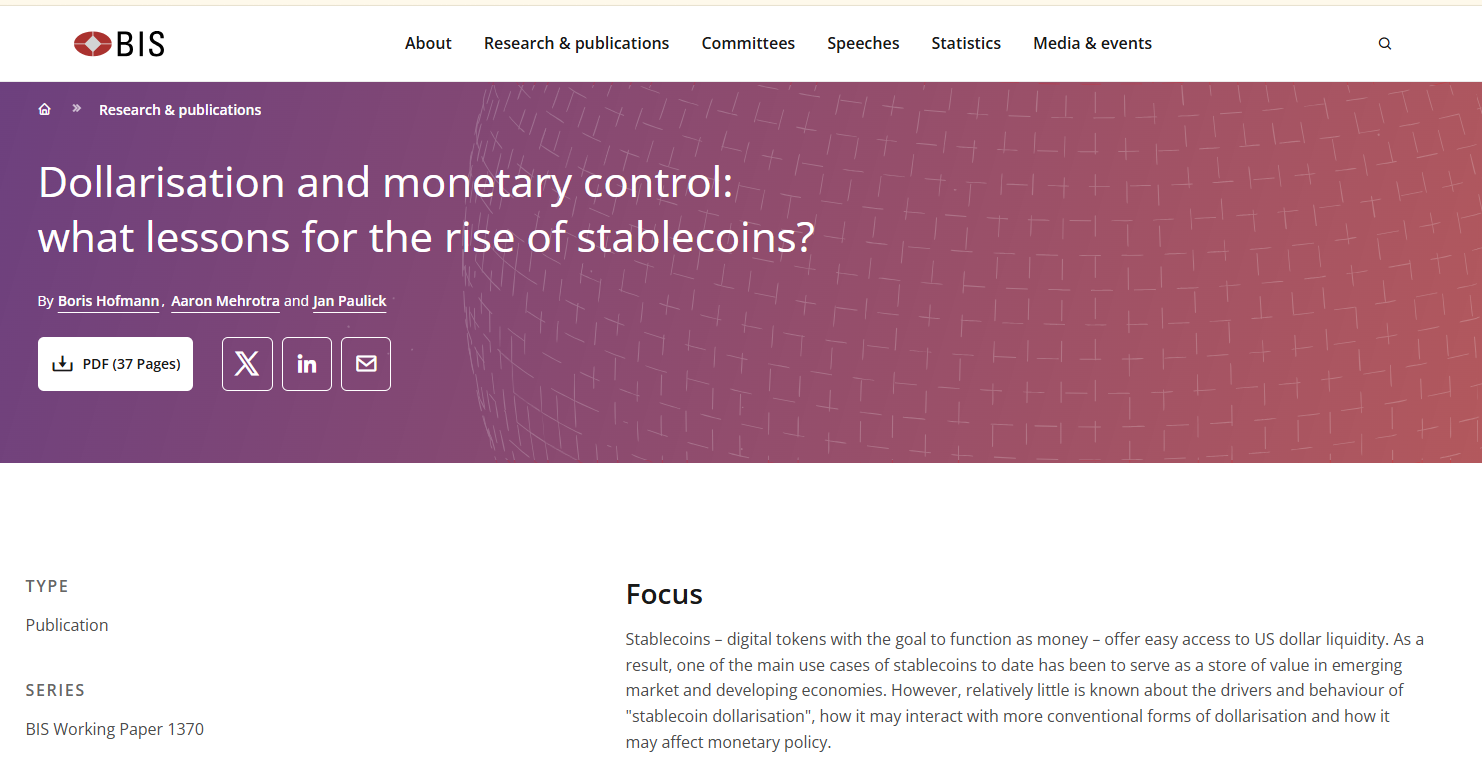
Lessons for the rise of stablecoins. Source: BIS
The European System of Central Banks proposed moving away from those fixed percentages earlier this month, toward requirements based on how quickly reserve assets can be made available.
That would avoid a doomsday scenario where heavy redemptions bleed commercial lenders dry overnight; something Tether chief executive Paolo Ardoino warned about in 2024, when he called MiCA “very dangerous when it comes to stablecoins.”
So the same system can create pressure in both directions: money can leave a bank and move into stablecoins when users want digital dollars, then flow back through banks when those stablecoins are redeemed.
The technology doesn’t determine which direction the flow takes, but it can determine how quickly it can happen.
So what actually gets displaced?
However, stablecoins are not taking over the world just yet. Often they are simply an intermediate currency that moves faster, but still ends up as dollars in the bank.
Pankaj Bengani, former executive at Block and co-founder of stablecoin payments company MELD, tells Cointelegraph that close to half of the company’s B2B stablecoin offramp volume is in North America.
He says the businesses using it include importers, exporters, technology firms, e-commerce marketplaces, payment companies and fintechs.
“The vast majority of corporates in our data convert back to fiat immediately after the transaction settles. They are not taking a crypto position. They are using MELD as a settlement rail instead of SWIFT,” Bengani says.
He says the biggest flows are cross-border commercial payments, particularly where businesses earn or hold dollars but suppliers and employees need local currency.
Supplier payments make up close to a third of business use, while invoice settlement accounts for roughly a quarter.
That paints a different picture from people turning to digital dollars to protect their savings from inflation or yanking lump sums out of the fiat system in times of stress.
And it raises another interesting question: if the money isn’t staying in crypto, what part of the traditional system is actually being displaced? Bengani says:
“Stablecoins won’t replace SWIFT overnight. The realistic change is a thinner correspondent layer, with a common settlement rail replacing intermediary steps that exist only because banks historically needed each other to cross borders.”
In a world where money moves at the speed of thought, that doesn’t mean banks disappear.
Bengani says reserves still sit in bank deposits and Treasuries, businesses still need fiat currencies, and banks remain important for “custody, compliance, liquidity, and local settlement.”
But what changes is the plumbing in between — stablecoins may not be removing banks from the financial system as much as changing where the friction sits.
Magazine: Exchanges reporting crypto gains to IRS becomes tax nightmare
Cointelegraph publishes long-form journalism, analysis and narrative reporting produced by Cointelegraph’s in-house editorial team with subject-matter expertise. All articles are edited and reviewed by Cointelegraph editors in line with our editorial standards. Some articles contain affiliate links, from which Cointelegraph may earn a commission. These relationships do not influence which products we review or our editorial conclusions. Content published in here does not constitute financial, legal or investment advice. Readers should conduct their own research and consult qualified professionals where appropriate. Cointelegraph maintains full editorial independence.