




Key takeaways:
- Spot Bitcoin ETFs saw $490 million in net outflows over three days, signaling a recent dip in institutional demand.
- Rising inflation is eroding real yields on fixed income, likely fueling long-term demand for scarce assets like BTC.
Bitcoin (BTC) faced three consecutive days of outflows from US-listed spot exchange-traded funds (ETFs). The outflows coincided with a failed attempt to reclaim $78,000. Traders fear more downside, but heightened US inflation will likely act as a catalyst for further bullish momentum.
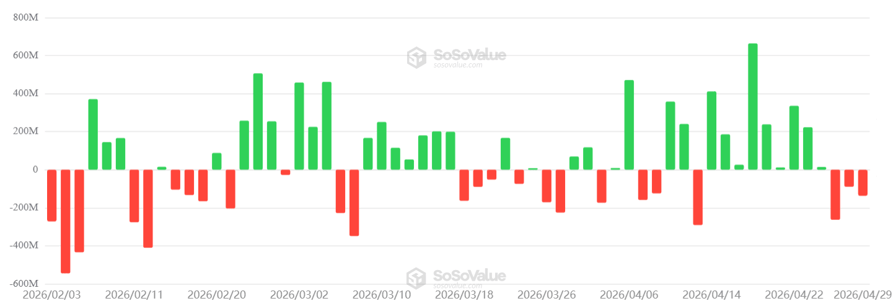
US-listed Bitcoin spot ETFs daily net flows, USD. Source: SoSoValue
The US-listed spot Bitcoin ETFs saw $490 million net outflows between Monday and Wednesday, reversing the trend from the prior two weeks, which indicates a decline in institutional demand. Still, a longer-term perspective shows $3.3 billion net inflows since March.
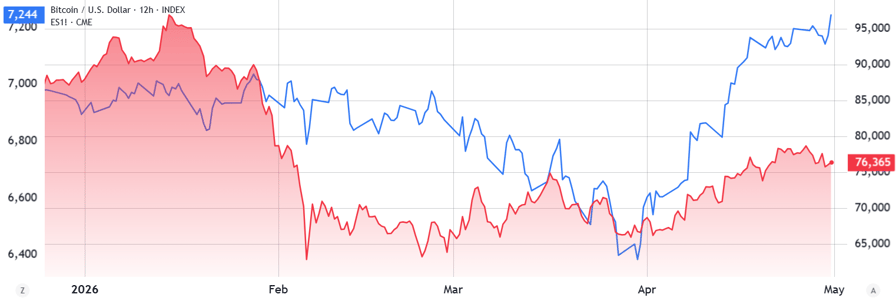
S&P 500 futures (left) vs. Bitcoin/USD (right). Source: TradingView
Part of the lack of confidence among traders can be attributed to the 14% year-to-date decline in Bitcoin’s price, while the S&P 500 soared to an all-time high. However, the tech sector came under scrutiny as quarterly earnings releases failed to impress investors. Meta (META US) faced a 9% correction on Thursday, while Microsoft (MSFT US) shares dropped 4%.
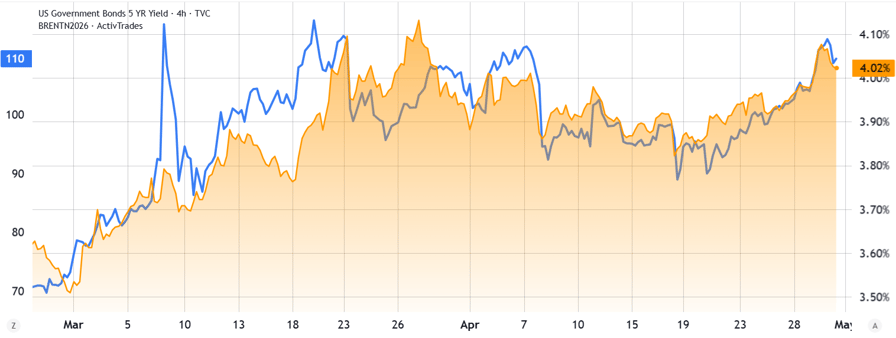
Brent crude oil (left) vs. US 5-year Treasury yield (right). Source: TradingView
Since the war in Iran started in late February, oil prices have been a major driver for risk appetite. The latest Brent crude oil rally to $126 coincided with yields on the US 5-year Treasuries jumping to 4.02%, up from 3.51% two months prior. Traders demanded higher yields on government-backed bonds amid upward pressure on inflation, triggering risk-off sentiment.
Higher inflation favors Bitcoin’s bullish momentum
Bitcoin’s lack of bullish momentum near $78,000 can also be pinned to worsening economic conditions. The US Commerce Department reported that gross domestic product grew at a 2% seasonally adjusted annualized rate in the first quarter, slightly below the 2.3% rate economists projected, according to CNN.
Related: Most crypto investors believe Bitcoin is undervalued–Coinbase survey
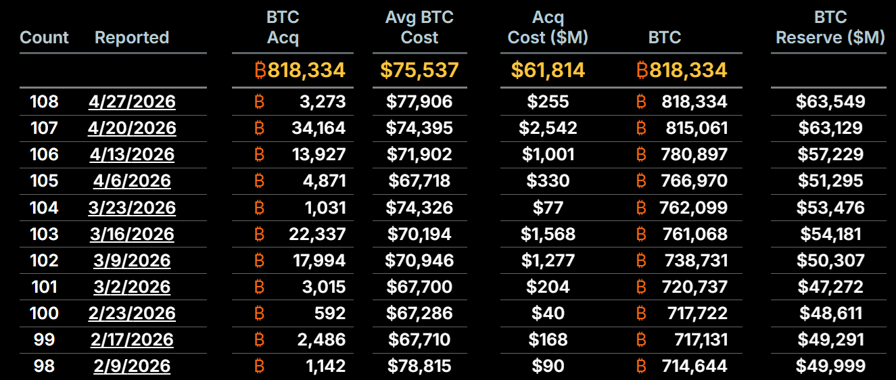
Strategy (MSTR US) latest Bitcoin acquisitions. Source: Strategy
Strategy, the company led by Executive Chairman Michael Saylor, announced the acquisition of 56,235 BTC in the first four weeks of April, driving its average cost to $75,537. Traders fear that the Bitcoin price could suffer if the Strategy accumulation pace does not hold up, even if only temporarily.
US President Donald Trump’s family’s activities in the cryptocurrency market have also hurt the industry’s appeal. Three US Senators demanded an inquiry into Trump and his family’s profits from their cryptocurrency ventures.
The risks of higher inflation and lower economic growth are unlikely to dissipate in the near term, but the mere three-day sequence of net outflows from Bitcoin ETFs should not be a source of concern. Ultimately, reduced returns on fixed income, when adjusted for inflation, will likely drive demand for scarce alternative assets. Thus, the Bitcoin path to $80,000 remains intact.