





Key Takeaways
- U.S. bitcoin ETFs had about $5.4 billion in first-half 2026 outflows.
- Strategy sold BTC three times this year, weakening a major corporate buying engine.
- Watch the Fed and Senate CLARITY vote on Sept. 15-16.
Bitcoin Headwinds
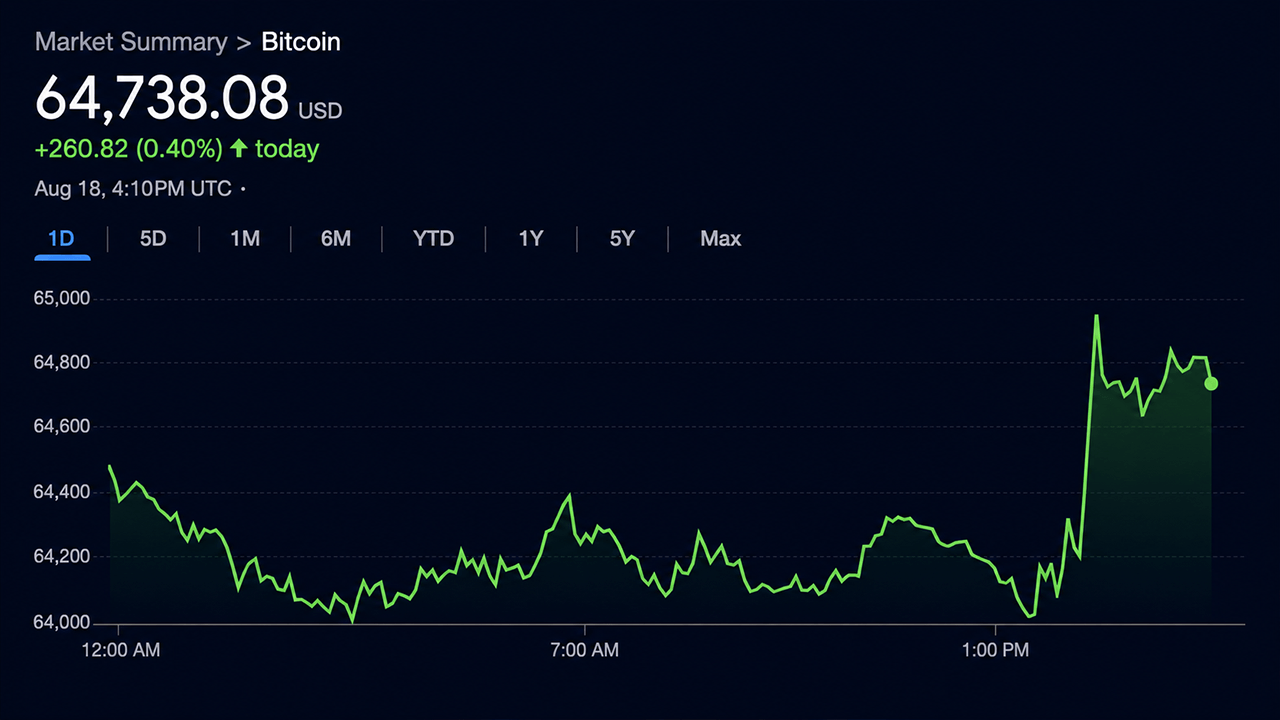
Bitcoin traded near $64,738 on Tuesday, Aug. 18 at 12:10 p.m. EDT, roughly half its October 2025 peak. The market’s dividing line is increasingly hard to miss: The bearish forces are already hitting balance sheets and order books, while the strongest bullish arguments still require decisions, adoption, and fresh capital thathave yet to arrive.
The ETF Bid Has Flipped
Unlike 2025’s record inflows, U.S. spot bitcoin exchange-traded funds (ETFs) recorded roughly $5.4 billion in net outflows in the first half of 2026. ETFs give investors bitcoin exposure through ordinary brokerage accounts, which makes their daily flows one of the cleanest gauges of whether institutional money is actually entering or leaving.
The funds still sit on a large base of investor capital, with cumulative net inflows of about $51.79 billion, according to sosovalue.com stats. The problem is that the dependable bid that once soaked up bitcoin supply has become erratic. The most recent week of Aug. 10-14 produced about $389.7 million in net outflows. Still, the U.S. spot bitcoin ETFs secure more than 1.1 million BTC valued at $76.61 billion today.
The Treasury Company Flywheel Broke
Strategy turned the corporate bitcoin treasury model into a capital-markets machine by selling stock and debt, buying bitcoin, and using its elevated valuation to raise still more money. That machine becomes considerably harder to run when the shares stop commanding a healthy premium over the bitcoin sitting on the balance sheet.
Strategy sold BTC on three separate occasions this year and redirected the proceeds toward preferred-share repurchases. The company still holds 840,447 BTC, so this is nowhere near a liquidation event. What changed is more important: Bitcoin has demonstrated that it can become the funding source when Strategy needs to defend its capital structure.
A Fed That May Hike, Not Cut
The Federal Reserve kept its benchmark rate at 3.50% to 3.75% in July, while three officials wanted a quarter-point increase. Markets have since dialed back expectations for a September hike, but traders are hardly pricing in the aggressive easing cycle risk assets would prefer.
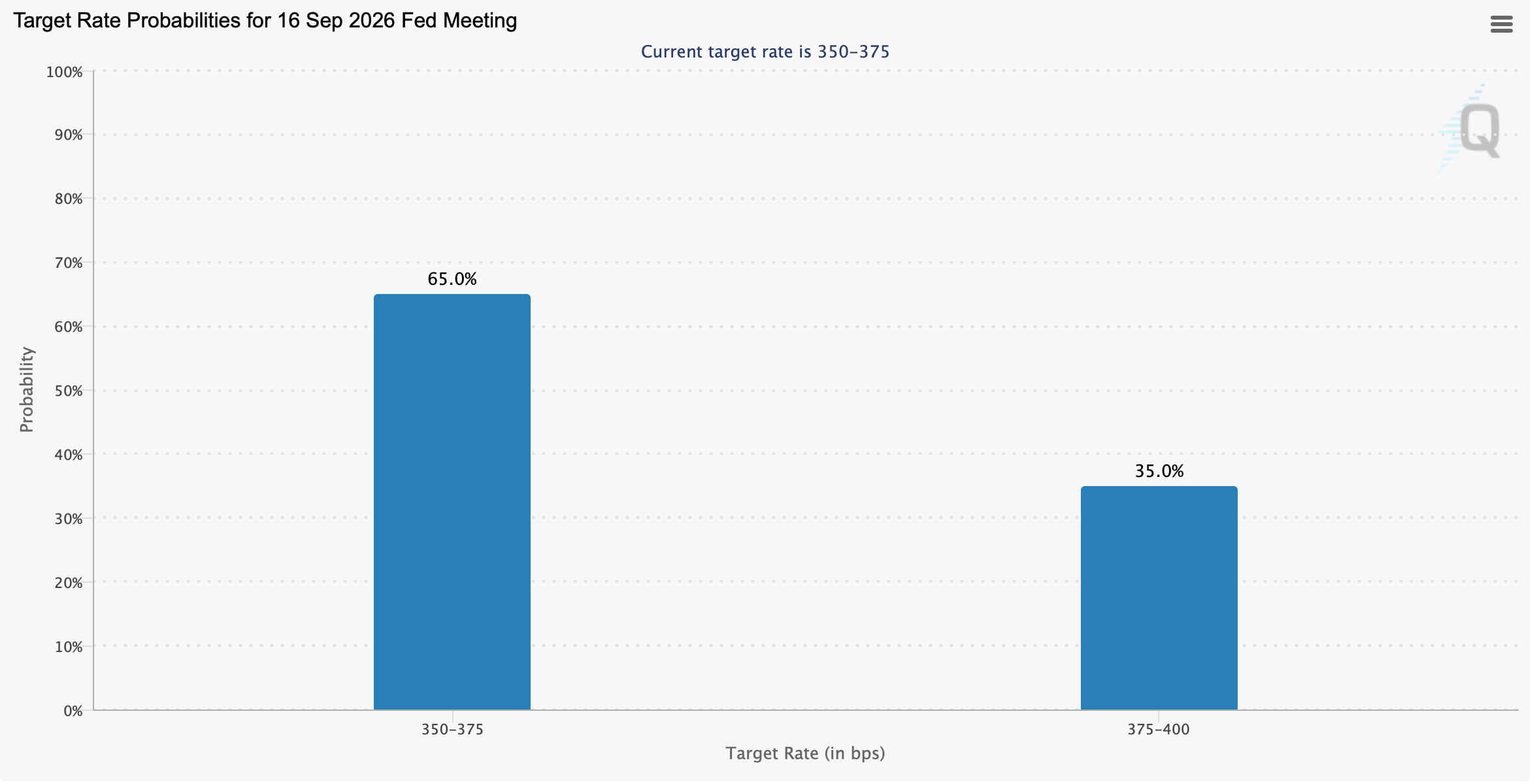
That distinction matters because elevated rates give investors attractive returns without touching volatile assets. The Fed does not need another hike to make life difficult for bitcoin. Keeping rates pinned higher can accomplish plenty on its own. Inflation and employment data before the Sept. 15-16 meeting could abruptly rewrite those expectations.
Miner Economics Have Hit the Wall
Bitcoin miners are grinding through some of their weakest economics in years. Hashprice, which measures mining revenue generated by each unit of computing power, averaged $31.21 per petahash per second per day in July, putting operators dangerously close to historical lows.
Older machines and miners stuck with expensive power are taking the worst of it. Public miners unloaded more than 32,000 BTC during the first quarter of 2026, setting a quarterly record as operators raised cash to keep running. Others are steering prized power sites toward AI and high-performance computing customers, where contracts can beat the economics of chasing block rewards.
Custody Shock
The now-infamous Coldcard security flaw delivered a painful lesson for affected wallet owners, though the Bitcoin network itself was never compromised. Attackers drained close to 2,000 BTC, then worth close to $116 million, after vulnerable devices generated weaker-than-intended recovery seeds. For holders, the Coldcard failure carries the sharper lesson: Firmware and recovery-seed security can turn theoretical weaknesses into irreversible losses.
At the same time, Trezor and Safepal suffered data breaches that exposed customers’ private information, including home addresses and personal details. The leaks put customer privacy at risk.
Bitcoin Tailwinds
But Bitcoin’s 2026 story is not all wreckage. Washington may move on rules, retirement access could very well open, and long-term holders are sitting tight. If fresh capital meets that shrinking supply, BTC could break higher soon in Q4. Bitcoin bears have run, and traders see new catalysts that could force sidelined money to return now.
Long-Term Holder Supply Hits a Record
Long-term holders, meaning investors whose coins have remained dormant for extended periods, appear to have been rebuilding their positions. Onchain analytics firm Cryptoquant recorded a 1.29 million BTC increase in its long-term-holder metric in May, the largest reading seen in more than six years.
There is an important catch: The record reading does not mean investors purchased 1.29 million BTC in a single month. Coins graduate into the long-term category simply by sitting untouched. Even so, increasingly immobile supply matters because renewed demand would have fewer readily available coins to chase.
The $9.9 Trillion 401(k) Door Cracks Open
The U.S. Labor Department is considering a framework that could make it easier for retirement-plan fiduciaries to assess products holding alternative assets. Nobody is ordering 401(k) plans to buy bitcoin, but loosening regulatory obstacles could open a channel that has largely remained closed to the asset.
The numbers explain why bulls are watching. U.S. 401(k) assets stood near $9.9 trillion in March 2026, meaning a hypothetical 1% allocation represents about $99 billion in exposure. That capital is not arriving tomorrow. Plan sponsors, asset managers and workers would still have to select appropriate products, making this a multiyear opportunity rather than an instant liquidity event.
Clarity Is Back From the Dead
The Digital Asset Market Clarity Act, known as CLARITY, is heading toward a Senate procedural vote scheduled for Sept. 15. The legislation targets one of crypto’s longest-running problems by defining how U.S. regulators oversee portions of the digital-asset market, including trading venues, custody providers, and intermediaries.
Passage remains far from guaranteed, with disputes over consumer protection, market integrity, and conflicts of interest still unresolved. But institutions have spent years treating regulatory uncertainty as a reason to wait. Clearer federal rules could remove that excuse, while the Securities and Exchange Commission’s planned crypto-assets framework offers another regulatory route if Congress stalls.
Mining Clears Out as One Tail Risk Dies
Mining pain eventually becomes self-correcting when inefficient machines shut down and Bitcoin’s automatic difficulty adjustment improves economics for whoever survives. Network hashrate stood about 12% below its December 2025 peak, while difficulty dropped roughly 5.7% in July, evidence that part of that clearing process is already happening.
Another potential protocol headache has also receded. BIP-110, a proposed activation path requiring 55% miner signaling, attracted little support and never came remotely close to threatening Bitcoin’s dominant chain. Low volatility and restrained leverage could amplify whatever major move comes next, but neither provides the market with a directional verdict.
Bitcoin’s immediate problem is whether genuine demand returns before another wave of supply hits the market. Sustained ETF inflows, fresh purchases from strong treasury companies, and fading Fed pressure would put real money behind the bullish thesis. Continued ETF withdrawals, miner liquidations, and corporate bitcoin sales would deliver the opposite message: The market still has not found its next heavyweight buyer.