




Europe’s securities regulator has warned that growing links between crypto and traditional finance could increase the risk of shocks spreading across the broader financial system.
In its latest risk monitoring report published Thursday, the European Securities and Markets Authority (ESMA) called for closer monitoring of the “growing linkage between increasingly vulnerable crypto-asset markets and the broader financial system.”
ESMA pointed to growing adoption of tokenized equities and recent decentralized finance (DeFi) exploits as areas that could deepen links between crypto and traditional markets and increase the potential for financial spillovers.
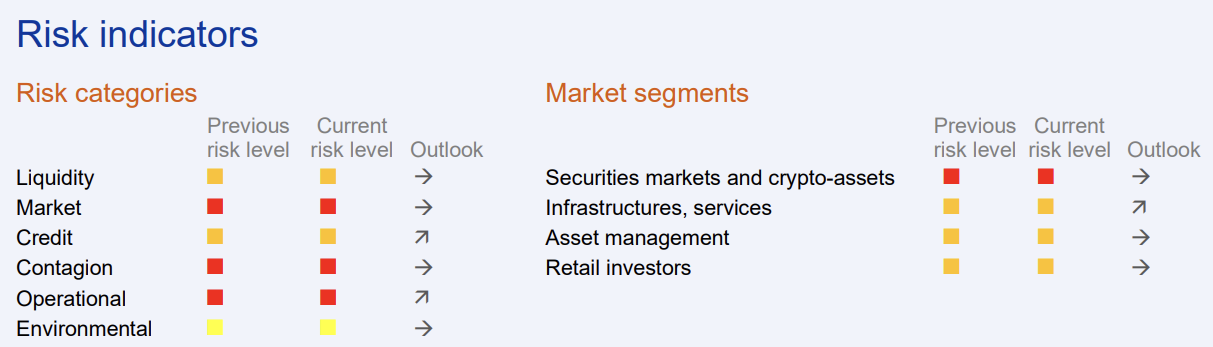
ESMA risk indicators for EU financial markets. Source: ESMA
The regulator said tokenized equities remain negligible compared with global stock markets but are gaining traction, potentially introducing new participants and infrastructure that could reshape market structure.
ESMA also flagged prediction markets as an emerging risk, warning of heightened concerns around insider trading and market manipulation. The regulator said crypto use in prediction markets can make it harder to detect insider trading, wash trading and coordinated market manipulation.
Related: MiCA cracks down on USDT in Europe… but no one else cares
Prediction markets face regulatory battle in US
ESMA’s warning comes as prediction markets face a growing regulatory battle in the United States over whether event contracts fall under federal derivatives law or state gambling rules.
The Commodity Futures Trading Commission (CFTC) has issued guidance for prediction markets throughout 2026 while defending what it says is its exclusive jurisdiction over federally regulated event contracts.
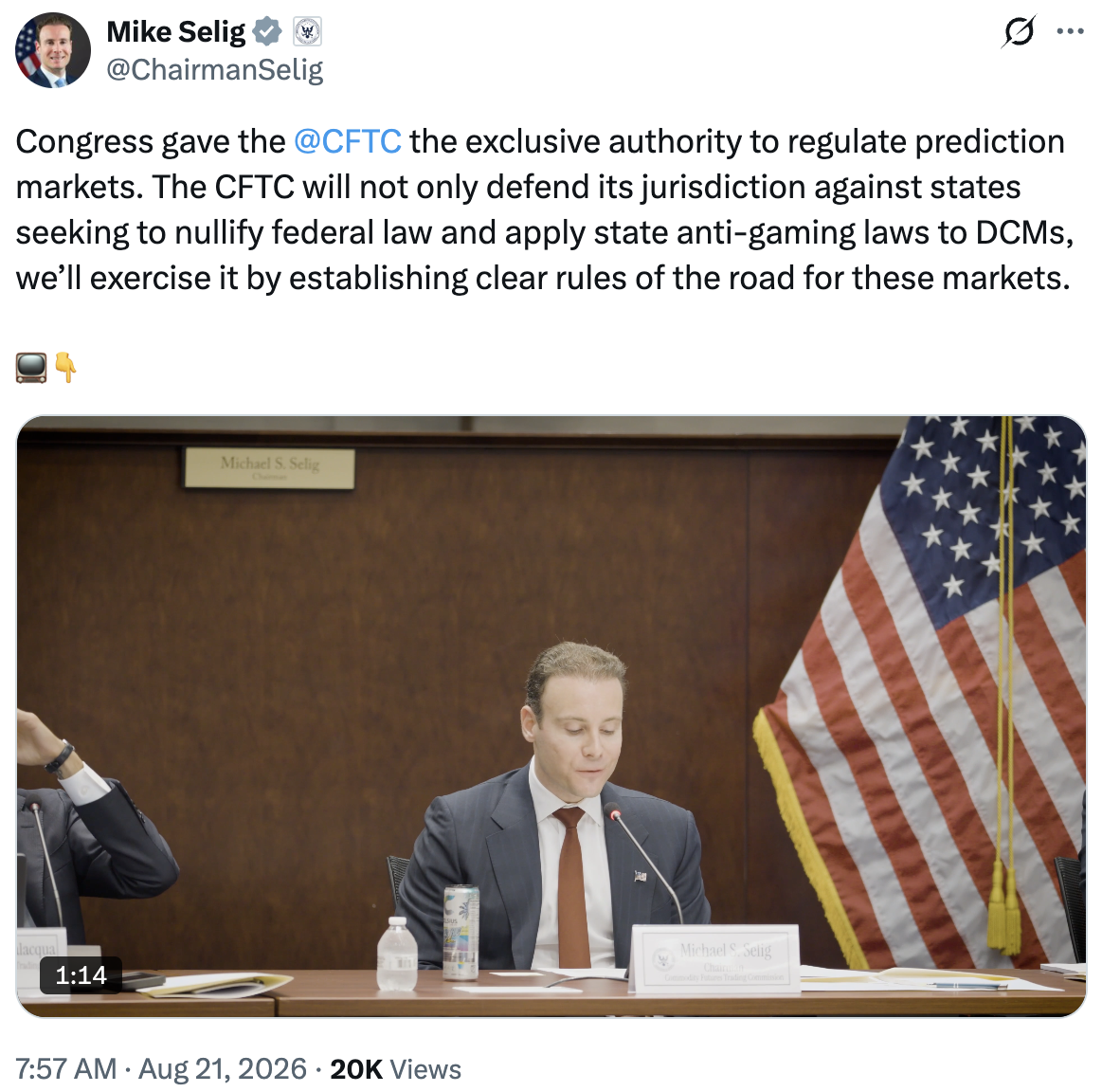
Source: Mike Selig
The agency has even sued several states, including Kentucky, Minnesota, New Mexico, New York, Illinois and Connecticut, after authorities sought to apply state gambling laws to prediction market operators.
The dispute could ultimately reach the US Supreme Court. On September 2, New Jersey officials petitioned the court to decide whether states can enforce sports gambling laws against prediction markets registered with the CFTC, citing litigation over the issue across at least 20 states.
Whether the Supreme Court takes up the issue remains unclear, but a future ruling could determine whether state or federal authorities have jurisdiction over prediction markets.
Magazine: Is Bitcoin too volatile to risk your retirement on?