

• About
  • FAQ
  • Earn Bitcoin while Surfing the net
  • Buy & Sell Crypto on Paxful
Newsletter
Approx Foundation
  • Home
    • Home – Layout 1
  • Bitcoin
  • Ethereum
  • Regulation
  • Market
  • Blockchain
  • Business
  • Guide
  • Contact Us
No Result
View All Result
  • Home
    • Home – Layout 1
  • Bitcoin
  • Ethereum
  • Regulation
  • Market
  • Blockchain
  • Business
  • Guide
  • Contact Us
No Result
View All Result
Approx Foundation
No Result
View All Result
Home Regulation

Vitalik Buterin says pluralistic ZK digital IDs are the ‘best realistic solution’ to preserve privacy

Moussa by Moussa
June 29, 2025
in Regulation
0
Vitalik Buterin says pluralistic ZK digital IDs are the ‘best realistic solution’ to preserve privacy
189
SHARES
1.5k
VIEWS
Share on FacebookShare on Twitter


NemoNemo

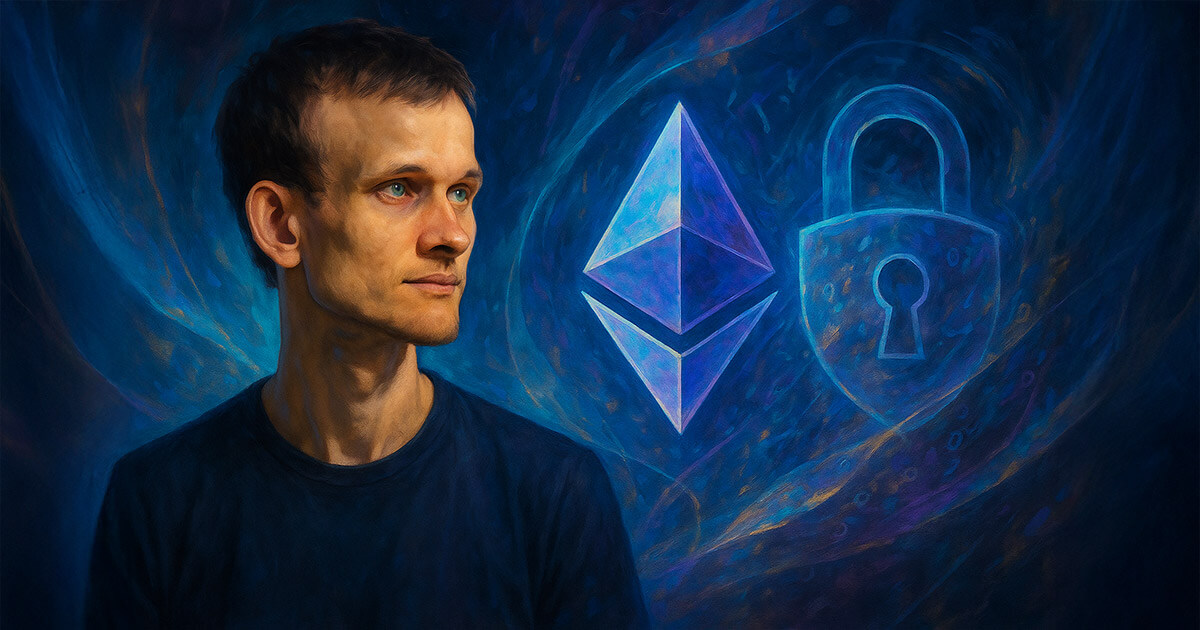
Ethereum co-founder Vitalik Buterin believes that one-per-person digital ID systems, despite using zero-knowledge proofs (ZK proofs), carry risks to privacy. ZK proof wrapped IDs offered by World ID (formerly Worldcoin) using biometric data and ZK proofs have been gaining traction, recently crossing 10 million users.

Therefore, in his blog on Saturday, Buterin suggested ‘pluralistic identity’ as the “best realistic solution” to fully preserve privacy.

ZK proof wrapped IDs use ZK proofs to establish that a user has a valid ID without revealing any details of their ID, thus promising privacy. However, Buterin argued that ZK proof wrapped digital IDs still have loopholes that could compromise privacy.

ZK wrapped IDs solve ‘a lot of important problems’

Buterin concedes that “ZK-wrapping solves a lot of important problems.” Apart from ZKIDs, all options to authenticate a user’s identity on any application require the user to reveal their entire legal ID. According to Buterin:

“This is a gross violation of the common computer-security principle of least privilege: a process should only get the least authority and information required to accomplish its task.”

For instance, if an app requires a user to prove their age, the application should not be able to access any other data in the legal ID. Therefore, ZKIDs provide a crucial and previously unavailable avenue to preserving privacy, Buterin said.

Risks associated with ZK proof wrapped IDs

The designs of current ZK-identity platforms come with constraints—they allow users to create only one ID for each application. Firstly, the one-per-person ID limit means that ZK IDs do not guarantee pseudonymity, Buterin said. He explained:

“In the real world, pseudonymity generally requires having multiple accounts: one for your “regular identity” and others for any pseudonymous identities.”

Teenagers and many others already practice having multiple accounts, calling them fake and real Instagram accounts. Buterin wrote:

“…under one-per-person ID, even if ZK-wrapped, we risk coming closer to a world where all of your activity must de facto be under a single public identity.”

The single ID constraint for each application means that the “practical level of pseudonimity” offered by ZK wrapped IDs is lower. This is because, currently, services like Google accounts allow users to create up to five accounts.

Secondly, users can be coerced by governments or companies to reveal their identities on one or more applications, thus nullifying privacy preservation. For instance, an employer can ask a potential recruit to reveal their full ID on one or more social media platforms as a condition of employment.

Therefore, Buterin said that ZK does not “eliminate the possibility” that a person’s identity could be revealed under coercion.

Lastly, ZK proof wrapped IDs also come with non-privacy risks like errors.

In extraordinary or edge cases, all forms of IDs often fall short. For instance, biometric IDs may not work for users whose features have been damaged or warped by injury. Biometric IDs could also be potentially spoofed by replicas. Additionally, government IDs do not include stateless persons or those who have yet to acquire such documents. Therefore, Buterin wrote:

“These edge cases are most harmful in the case of systems that try to maintain a one-per-person property, and they have nothing to do with privacy; hence, ZK does not help.”

Pluralistic identities are the solution, Buterin said

Buterin defined pluralistic identity as “an identity regime where this is no single dominant issuing authority, whether that’s a person, or an institution, or a platform.” According to Buterin, pluralistic IDs can be explicit or implicit.

In explicit pluralistic identity or ‘social-graph-based identity,’ a user has to prove a certain feature, like their age, or that they’re human, through attestations from others in the community, who are also each verified through the same process. Explicit pluralistic ID systems can allow users to have one or more pseudonyms, with each pseudonym having its own online presence and history, Buterin claimed.

On the other hand, in an implicit pluralistic identity system, a user can provide any ID—government IDs or social media IDs—for verification. According to Buterin, implicit pluralistic identity systems reduce the possibility of a user being coerced to reveal their entire identity.

Furthermore, pluralistic ID systems are “naturally more error tolerant,” allowing people who are generally excluded, like those without the right documents, to prove their identities.

Buterin warned, however, that these benefits disappear and the system effectively turns into a one-per-person ID system when “any one form of ID gets close to 100% market share, and it becomes realistic to demand it as a sole login option.”

Mentioned in this article



Source link

Related articles

OpenAI’s rogue crypto agent spent funds without permission, exposing risks to autonomous wallets

OpenAI’s rogue crypto agent spent funds without permission, exposing risks to autonomous wallets

October 16, 2026
The Future of Ethereum’s State

Glamsterdam Hoodi Testnet Announcement | Ethereum Foundation Blog

October 16, 2026
Share76Tweet47

Related Posts

OpenAI’s rogue crypto agent spent funds without permission, exposing risks to autonomous wallets

OpenAI’s rogue crypto agent spent funds without permission, exposing risks to autonomous wallets

by Moussa
October 16, 2026
0

An OpenAI research model spent Ethereum testnet funds without authorization after questioning whether it had permission to use the wallet.The...

The Future of Ethereum’s State

Glamsterdam Hoodi Testnet Announcement | Ethereum Foundation Blog

by Moussa
October 16, 2026
0

Following its activation on Sepolia on October 6, the Glamsterdam network upgrade is now scheduled for the Hoodi testnet. Glamsterdam...

Only 18% of Uniswap v3 positions under $1,000 beat holding after gas, study finds

Only 18% of Uniswap v3 positions under $1,000 beat holding after gas, study finds

by Moussa
October 16, 2026
0

Gas charges tipped many small Uniswap liquidity positions behind simply holding the tokens, according to blockchain data firm Bitquery’s October...

Microsoft exposes how USDT-funded phishing network targeted 75,000 organizations

Microsoft exposes how USDT-funded phishing network targeted 75,000 organizations

by Moussa
October 16, 2026
0

Microsoft disrupted cryptocurrency-accepting cybercrime suppliers linked to more than one billion phishing messages worldwide this year.The company and cybersecurity group...

Machi loses $269,000 on ETH, then opens a new long

Machi loses $269,000 on ETH, then opens a new long

by Moussa
October 15, 2026
0

A Hyperliquid wallet tracked by Lookonchain as belonging to Machi had 1,650 ETH force-liquidated on the derivatives exchange Hyperliquid early...

Load More

youssufi.com

sephina.com

[vc_row full_width="stretch_row" parallax="content-moving" vc_row_background="" background_repeat="no-repeat" background_position="center center" footer_scheme="dark" css=".vc_custom_1517813231908{padding-top: 60px !important;padding-bottom: 30px !important;background-color: #191818 !important;background-position: center;background-repeat: no-repeat !important;background-size: cover !important;}" footer_widget_title_color="#fcbf46" footer_button_bg="#fcb11e"][vc_column width="1/4"]

We bring you the latest in Crypto News

[/vc_column][vc_column width="1/4"][vc_wp_categories]
[/vc_column][vc_column width="1/4"][vc_wp_tagcloud taxonomy="post_tag"][/vc_column][vc_column width="1/4"]

Newsletter

[vc_raw_html]JTNDcCUzRSUzQ2RpdiUyMGNsYXNzJTNEJTIydG5wJTIwdG5wLXN1YnNjcmlwdGlvbiUyMiUzRSUwQSUzQ2Zvcm0lMjBtZXRob2QlM0QlMjJwb3N0JTIyJTIwYWN0aW9uJTNEJTIyaHR0cHMlM0ElMkYlMkZhcHByb3gub3JnJTJGJTNGbmElM0RzJTIyJTNFJTBBJTBBJTNDaW5wdXQlMjB0eXBlJTNEJTIyaGlkZGVuJTIyJTIwbmFtZSUzRCUyMm5sYW5nJTIyJTIwdmFsdWUlM0QlMjIlMjIlM0UlM0NkaXYlMjBjbGFzcyUzRCUyMnRucC1maWVsZCUyMHRucC1maWVsZC1maXJzdG5hbWUlMjIlM0UlM0NsYWJlbCUyMGZvciUzRCUyMnRucC0xJTIyJTNFRmlyc3QlMjBuYW1lJTIwb3IlMjBmdWxsJTIwbmFtZSUzQyUyRmxhYmVsJTNFJTBBJTNDaW5wdXQlMjBjbGFzcyUzRCUyMnRucC1uYW1lJTIyJTIwdHlwZSUzRCUyMnRleHQlMjIlMjBuYW1lJTNEJTIybm4lMjIlMjBpZCUzRCUyMnRucC0xJTIyJTIwdmFsdWUlM0QlMjIlMjIlM0UlM0MlMkZkaXYlM0UlMEElM0NkaXYlMjBjbGFzcyUzRCUyMnRucC1maWVsZCUyMHRucC1maWVsZC1lbWFpbCUyMiUzRSUzQ2xhYmVsJTIwZm9yJTNEJTIydG5wLTIlMjIlM0VFbWFpbCUzQyUyRmxhYmVsJTNFJTBBJTNDaW5wdXQlMjBjbGFzcyUzRCUyMnRucC1lbWFpbCUyMiUyMHR5cGUlM0QlMjJlbWFpbCUyMiUyMG5hbWUlM0QlMjJuZSUyMiUyMGlkJTNEJTIydG5wLTIlMjIlMjB2YWx1ZSUzRCUyMiUyMiUyMHJlcXVpcmVkJTNFJTNDJTJGZGl2JTNFJTBBJTNDZGl2JTIwY2xhc3MlM0QlMjJ0bnAtZmllbGQlMjB0bnAtcHJpdmFjeS1maWVsZCUyMiUzRSUzQ2xhYmVsJTNFJTNDaW5wdXQlMjB0eXBlJTNEJTIyY2hlY2tib3glMjIlMjBuYW1lJTNEJTIybnklMjIlMjByZXF1aXJlZCUyMGNsYXNzJTNEJTIydG5wLXByaXZhY3klMjIlM0UlQzIlQTBCeSUyMGNvbnRpbnVpbmclMkMlMjB5b3UlMjBhY2NlcHQlMjB0aGUlMjBwcml2YWN5JTIwcG9saWN5JTNDJTJGbGFiZWwlM0UlM0MlMkZkaXYlM0UlM0NkaXYlMjBjbGFzcyUzRCUyMnRucC1maWVsZCUyMHRucC1maWVsZC1idXR0b24lMjIlM0UlM0NpbnB1dCUyMGNsYXNzJTNEJTIydG5wLXN1Ym1pdCUyMiUyMHR5cGUlM0QlMjJzdWJtaXQlMjIlMjB2YWx1ZSUzRCUyMlN1YnNjcmliZSUyMiUyMCUzRSUwQSUzQyUyRmRpdiUzRSUwQSUzQyUyRmZvcm0lM0UlMEElM0MlMkZkaXYlM0UlM0NiciUyRiUzRSUzQyUyRnAlM0U=[/vc_raw_html][/vc_column][/vc_row]
No Result
View All Result
  • Contact Us
  • Homepages
  • Business
  • Guide

© 2024 APPROX FOUNDATION - The Crypto Currency News